Introduction
3-piece forged wheels are not just about looks—they are high-performance components engineered for flexibility, strength, and serviceability. Popular in motorsports, luxury tuning, and custom vehicle applications, 3-piece wheels are known for their modular design and ability to be tailored to exact vehicle specs.
But what exactly goes into the construction of a 3-piece forged wheel? How do the components come together, and why are they preferred in certain use cases over monoblock or 2-piece designs?
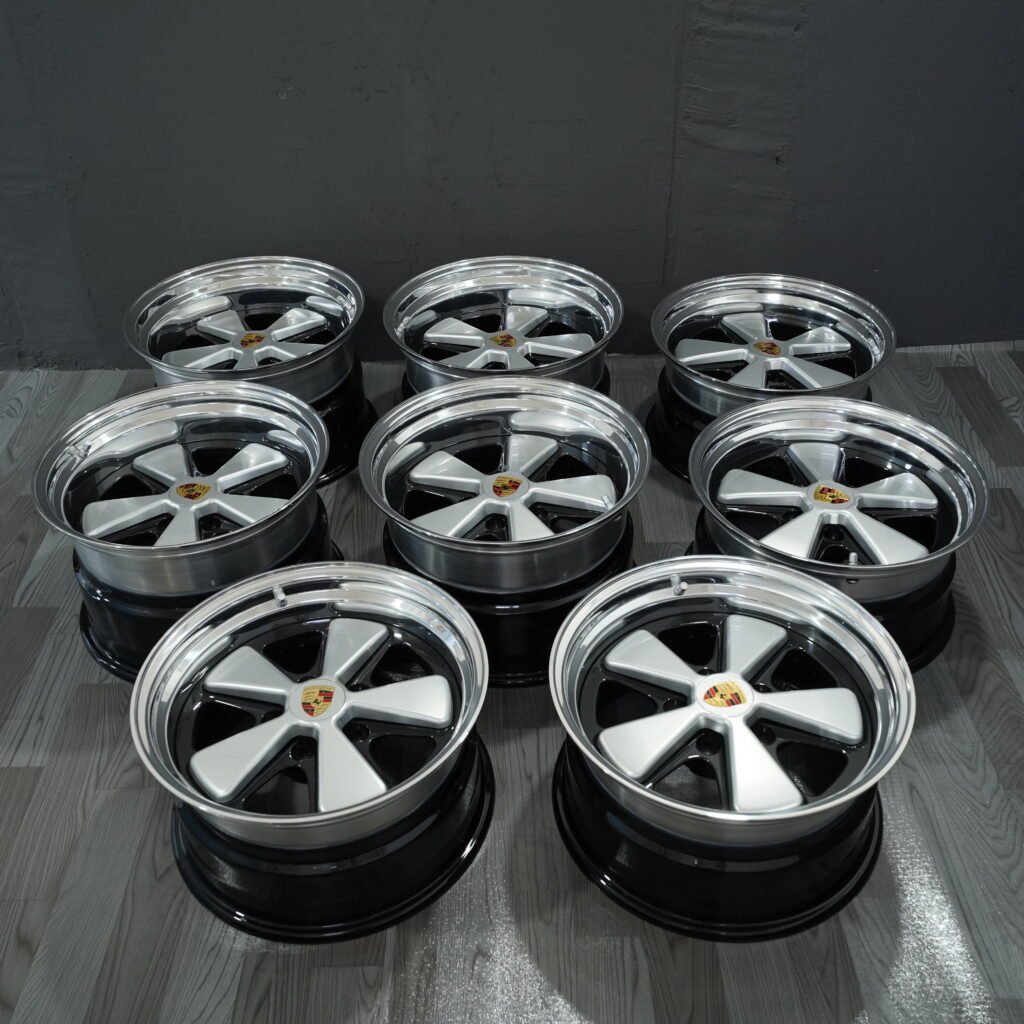
This comprehensive guide breaks down the anatomy, design logic, and real-world benefits of 3-piece forged wheels—helping automotive professionals and buyers make informed decisions.
What Is a 3-Piece Forged Wheel?
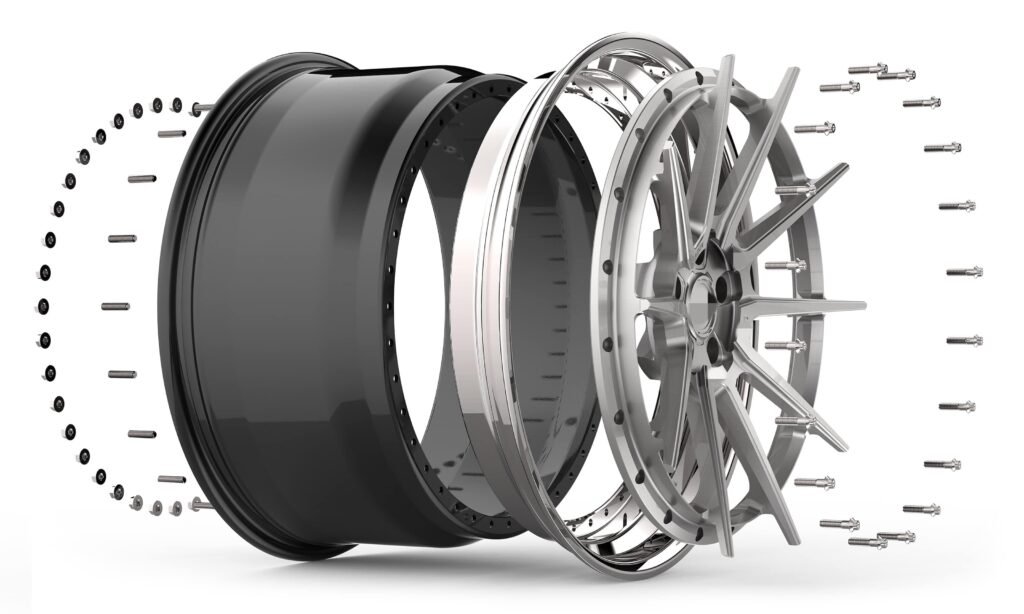
A 3-piece forged wheel is made up of three separately manufactured components:
- Center Disc
- Outer Lip (or Rim Lip)
- Inner Barrel (or Rim Barrel)
Each part is forged from high-grade aluminum alloys—typically 6061-T6—to ensure strength, lightweight performance, and resistance to corrosion.
These components are then bolted together using high-tensile hardware and sealed with silicone or similar bonding materials to prevent air leakage (in tubeless configurations).
Anatomy of a 3-Piece Forged Wheel
Let’s look closer at the function and design of each component:
1. Center Disc
This is the “face” of the wheel and plays a critical role in structural integrity, styling, and vehicle fitment (e.g., PCD, offset, and brake clearance). Forged center discs are CNC-machined for maximum precision and customized based on:
- Vehicle platform
- Offset (ET) requirements
- Brake caliper clearance
- Bolt pattern and center bore
Modern designs may include concave or deep-dish profiles, which are more achievable in 3-piece configurations than in monoblock wheels.
💡 Pro Tip: Custom center disc designs allow tuning shops to create unique looks without compromising wheel geometry.
2. Outer Lip
The outer lip defines the visual depth of the wheel and also contributes to lateral strength. It is usually polished, anodized, or brushed for aesthetics and corrosion resistance. The lip size can range from 0.5” to over 5” depending on the application.
- Step Lip vs. Reverse Lip
- Step Lip: Adds visual depth and retro aesthetics
- Reverse (Flat) Lip: Offers a clean, modern look but may reduce barrel strength
3. Inner Barrel
The inner barrel handles the load-bearing aspect of the wheel and plays a crucial role in structural stability. It must be perfectly round and balanced to ensure safe operation, especially at high speeds or under dynamic loads (e.g., drifting or racing).
🔧 Barrels and lips must be sourced with high machining accuracy. Poor tolerances can lead to wheel wobble, air leaks, or premature wear.
Key Design Benefits of 3-Piece Forged Wheels
✅ Modularity and Customization
Each wheel can be built to exact specs by mixing and matching lip and barrel sizes with the desired disc offset—ideal for staggered setups or wide-body builds.
✅ Easy Repairs and Part Replacement
Damaged lips or barrels can be replaced individually without needing to buy a full new wheel. This makes them more cost-effective for high-risk environments like motorsports.
✅ Weight Optimization
By adjusting the thickness of individual components, manufacturers can control the wheel’s weight distribution for better handling, unsprung weight reduction, and brake cooling.
✅ Unique Aesthetics
Multiple finishes can be applied to each component, enabling more creative freedom for builders, tuners, and OEM+ customization projects.
Common Use Cases
- Performance Cars (BMW M, Porsche, AMG)
- Luxury Custom Builds
- Off-Road Trucks & SUVs
- Electric Vehicle Restomods
- Widebody Drift or Track Cars
Industry Standards & Best Practices
When sourcing or evaluating 3-piece forged wheels, attention to detail is critical. Reputable manufacturers follow these best practices:
| Standard | Purpose |
|---|---|
| SAE J328 | Ensures fatigue and impact resistance in aftermarket wheels |
| VIA Certification | Mandates testing for JWL standards under Japanese law |
| CNC Machining from 6061-T6 | Ensures lightweight strength and precision |
| Torque-Sealed Fasteners | Prevent loosening under stress and temperature changes |
📌 Always ask suppliers if lips and barrels are machined in-house or outsourced. Quality control in these parts is just as important as in the center disc.
Common Buyer Questions – Answered
Can I choose the exact width and offset?
Yes. The modular nature of 3-piece wheels allows for precise control over width (J) and offset (ET) by selecting different lip and barrel sizes.
Are 3-piece wheels safe for daily driving?
Absolutely. When properly engineered, assembled, and torqued, 3-piece wheels perform safely in daily and extreme conditions.
Do 3-piece wheels require special maintenance?
Minimal. Periodic checks on bolt torque and sealant integrity are recommended, especially after high-speed or off-road use.
What finishes are available?
Each component can be finished differently—painted, brushed, anodized, or polished. This creates a multi-tone look that’s difficult to achieve with monoblock wheels.
Real-World Example
A performance shop in Germany built a widebody GR Supra using custom 3-piece forged wheels from FLEXIFORGED. The rear wheels featured:
- 12J width with 5″ step lips
- Forged concave disc with brushed clear finish
- Black anodized barrels for corrosion resistance
The flexibility allowed them to clear upgraded brakes and achieve a perfect flush stance—while retaining full tire contact during track use.
Final Thoughts
3-piece forged wheels offer unmatched flexibility, repairability, and design freedom. They’re ideal for performance applications and custom builds where no compromises are accepted.
Understanding the function of each component—and working with a qualified supplier—is the key to maximizing their benefits.
📩 Need expert consultation or custom sizing for your next project?
Contact us: jackie.wei@flexiforged.com
Visit our website: 🌐 https://flexiforgewheel.com