If you are comparing monoblock vs 2-piece vs 3-piece wheels, the most important thing to know is this:
There is no single “best” wheel structure for every build.
The best structure depends on what your project needs most: lower weight, higher stiffness, easier maintenance, more lip options, more offset flexibility, stronger visual impact, or easier customization.
For most track-focused and performance street builds, monoblock wheels are usually the best starting point. For many premium street and luxury customization projects, 2-piece wheels often offer the best balance of performance and customization. For widebody, deep-dish, high-visual-impact, and highly custom fitment projects, 3-piece wheels are usually the most flexible choice. WORK’s official wheel construction guide explicitly defines 1-piece, 2-piece, and 3-piece this way, and notes that 2-piece and 3-piece structures are especially useful for custom orders, while 3-piece offers many rim width choices suited to customized vehicles such as wide-fender builds.
The Short Answer
Choose Monoblock if you want:
- the simplest structure
- strong stiffness-to-weight performance
- fewer maintenance concerns
- a cleaner solution for serious performance driving
Choose 2-Piece if you want:
- a strong balance between performance and customization
- more flexibility in inset/offset configuration
- more premium customization options without going fully 3-piece
Choose 3-Piece if you want:
- the most customization freedom
- more lip and barrel flexibility
- the best fit for widebody, deep-dish, or show-oriented applications
- easier modular-style replacement or reconfiguration in some project scenarios
That overall logic matches how brands and technical wheel companies describe these structures: WORK highlights 2-piece and 3-piece custom order flexibility and 3-piece rim-width options; APEX notes that 1-piece wheels usually have lower maintenance demands and can offer major advantages in stiffness, strength, and weight when executed as forged monoblocks; Forgeline describes one-piece monoblocks as extremely stiff, exceptionally strong, and very lightweight.
What Is a Monoblock Wheel?
A monoblock wheel is a 1-piece wheel. That means the wheel is made as a single structural piece rather than assembled from multiple parts. WORK’s official guide says everything from the rim flange to the face is molded as a single piece, and specifically notes that this structure is easy to make rigid and high in strength, making it suitable for sports driving. WORK also explicitly says this structure is also called monoblock.
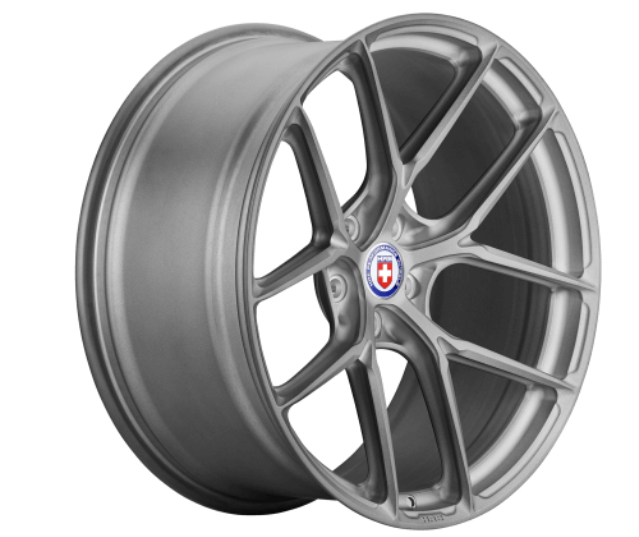
For performance buyers, that matters because fewer joints and no assembly hardware usually means a more direct path to stiffness, weight efficiency, and lower maintenance complexity. APEX’s technical explanation says 1-piece wheels have minimal maintenance requirements relative to 2-piece and 3-piece wheels, and that the lack of bolts or heavy assembly flanges means 1-piece wheels tend to offer more substantial weight savings than modular designs.
Monoblock Pros
- Usually the best choice for performance-focused driving
- Typically offers the cleanest stiffness-to-weight package
- Usually simpler to maintain than modular wheel structures
- Strong fit for track cars, performance sedans, sports cars, and fast street builds
Monoblock Cons
- Less visual modular drama than true multi-piece wheels
- Usually less lip/barrel flexibility than 3-piece designs
- May offer less customization freedom than modular construction, depending on the brand and program
Best Use Cases for Monoblock Wheels
- Porsche 911 track/street builds
- BMW M cars
- Audi RS builds
- Nissan GT-R
- Toyota Supra
- Corvette, Camaro, Mustang
- High-performance EVs and luxury performance SUVs
What Is a 2-Piece Wheel?
A 2-piece wheel is made from two primary parts, usually the rim and the disk/center. WORK’s official explanation says exactly that, and adds that on its 2-piece wheels, inset can be selected freely within the movable range. WORK also states that because the wheel is divided into rim and disk, custom orders are possible, including painting and processing of the disk, changes to rim anodizing specifications, and laser processing.
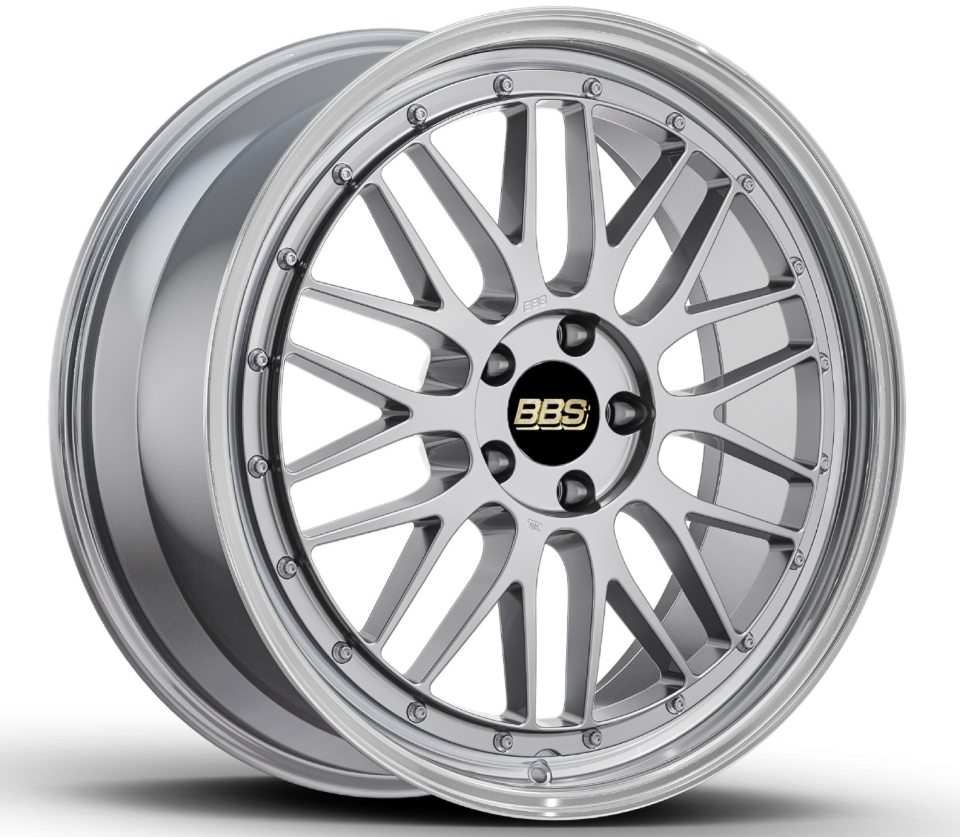
That makes 2-piece wheels especially attractive when you need more customization than a monoblock, but do not necessarily need the full visual or fitment flexibility of a 3-piece wheel.
2-Piece Pros
- Good balance between performance and customization
- More fitment and finish flexibility than monoblock in many programs
- Strong option for premium street, luxury, and upscale performance projects
- Often a practical middle ground for B2B custom programs
2-Piece Cons
- Usually not as simple as a monoblock structure
- Can be heavier than an equivalent monoblock, depending on design and materials
- Still not as flexible as a true 3-piece wheel when maximum rim/lip configuration freedom is required
Best Use Cases for 2-Piece Wheels
- Luxury sedans and SUVs
- Premium OEM-plus projects
- Exotic and supercar street builds
- Projects that need tailored fitment and finish options without going full 3-piece
What Is a 3-Piece Wheel?
A 3-piece wheel is made from three parts: outer rim, inner rim, and disk/center. WORK’s official wheel-structure guide states that directly, and also notes that the final inset is determined by the combination of outer rim, inner rim, and disk. Most importantly for custom projects, WORK says there are many rim width options available, making 3-piece wheels suitable for customized vehicles such as wide-fender builds.
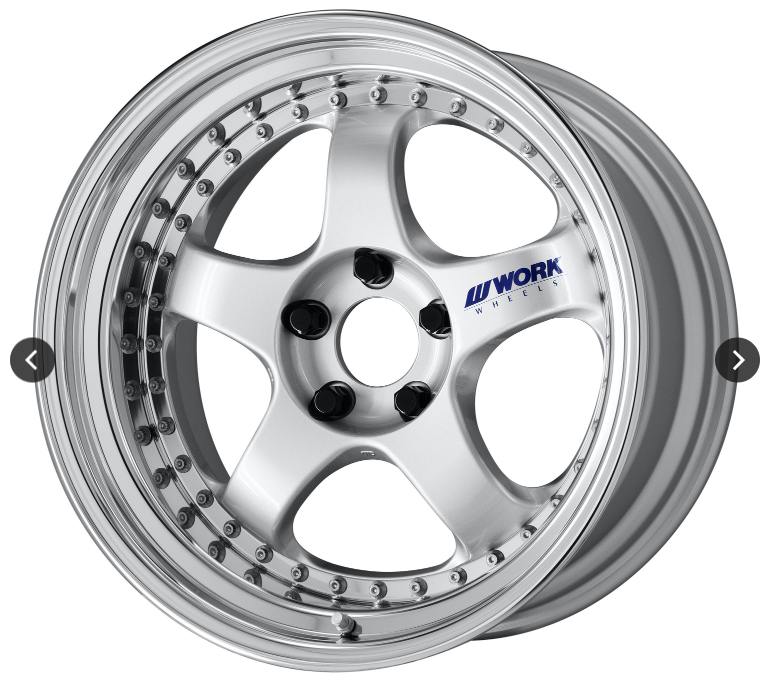
That is why 3-piece wheels remain so popular in high-end custom builds, deep-dish applications, show cars, VIP builds, and projects where visual stance and exact fitment matter as much as raw performance.
3-Piece Pros
- Highest level of customization freedom
- Best fit for deep-dish, stepped lip, and aggressive custom fitment projects
- Excellent for widebody and wide-fender applications
- Strong visual appeal in premium and show-oriented builds
3-Piece Cons
- Usually more complex than monoblock
- Often requires more attention to assembly-related details than a 1-piece wheel
- Not always the best choice when your first priority is absolute weight efficiency or maximum simplicity
Best Use Cases for 3-Piece Wheels
- Widebody builds
- Deep-dish luxury projects
- VIP sedans
- Show cars
- Stance-oriented premium builds
- Custom vehicles where offset, lip size, and appearance are central to the project
Forgeline’s WC3 product page is a good real-world example of why 3-piece wheels remain attractive in custom work: the brand highlights true forged 6061-T6 centers, heat-treated rim shells, stainless ARP fasteners, and built-to-order features such as custom offsets, center-locking hubs, and different finish combinations.
Monoblock vs 2-Piece vs 3-Piece Wheels: Side-by-Side Comparison
| Factor | Monoblock | 2-Piece | 3-Piece |
|---|---|---|---|
| Structure | Single-piece | Rim + center | Outer rim + inner rim + center |
| Performance potential | Usually strongest starting point for performance | Strong, but depends on design/program | Can perform very well, but usually chosen more for customization flexibility |
| Weight efficiency | Usually strongest | Moderate to strong | Usually less optimized for minimum weight than a comparable monoblock |
| Maintenance simplicity | Best | Moderate | Lowest |
| Custom offsets / inset flexibility | Limited to program | Better | Best |
| Lip / barrel flexibility | Limited | Moderate | Best |
| Widebody suitability | Moderate | Good | Excellent |
| Show-car visual impact | Good | Strong | Excellent |
| Best for | Track, fast street, clean performance builds | Premium street and custom performance balance | Widebody, deep-dish, VIP, show, max-fitment builds |
This comparison is consistent with the way major wheel companies frame their products: WORK emphasizes custom order and fitment flexibility in 2-piece and especially 3-piece wheels; APEX emphasizes the performance and maintenance advantages of 1-piece wheels; Forgeline positions its one-piece monoblocks as the stiffest, strongest, and lightest racing-oriented option.
Which Structure Is Best for Performance Builds?
For most pure performance builds, monoblock is usually the best answer.
That does not mean every monoblock wheel is automatically better than every 2-piece or 3-piece wheel. Design quality, material, forging quality, vehicle fitment, brake clearance, and intended use still matter. But if your priorities are lighter construction, higher stiffness, lower maintenance, and a more purpose-driven performance setup, monoblock usually wins the comparison.
APEX’s technical breakdown specifically says some forged monoblock 1-piece wheels can offer an exceptional balance of strength, stiffness, and weight savings, and that 1-piece wheels have fewer maintenance demands than 2-piece and 3-piece wheels. Forgeline goes even further in its monoblock category page, stating that its fully forged one-piece monoblock wheels are machined from a single 6061-T6 aluminum forging to create a wheel that is extremely stiff, exceptionally strong, and very lightweight.
Best choice for:
- track day cars
- time attack builds
- fast road cars
- brake-clearance-sensitive performance projects
- lightweight-focused forged wheel programs
Which Structure Is Best for Luxury and Premium Street Builds?
For many luxury and premium street builds, 2-piece wheels are often the best balance.
That is because buyers in this segment usually want more than just performance. They also care about:
- design depth
- finish choices
- tailored offsets
- premium appearance
- vehicle-specific customization
A good 2-piece forged wheel program can often satisfy those priorities while keeping a cleaner, more manageable package than a full 3-piece wheel. WORK explicitly notes that its 2-piece wheels allow inset selection within a defined range and support custom orders such as disc finishing and rim anodizing changes, which is exactly why this structure remains so commercially attractive in upscale custom applications.
Best choice for:
- Mercedes-Benz
- BMW
- Audi
- Porsche street builds
- Range Rover
- Bentley-style premium SUV projects
- upscale dealer and tuner programs
Which Structure Is Best for Widebody and Deep-Dish Builds?
For most widebody, deep-dish, and maximum-custom-fitment projects, 3-piece wheels are usually the best option.
This is where 3-piece construction really shines. Because the inner barrel, outer lip, and center are separate components, brands can create many more rim-width and fitment combinations than a typical 1-piece program. WORK says its 3-piece structure offers many rim width options and is suitable for customized vehicles such as wide fenders. Forgeline’s built-to-order 3-piece products also emphasize custom offsets and multiple finish combinations.
Best choice for:
- wide-fender cars
- show cars
- VIP sedans
- deep-dish projects
- old-school multi-piece aesthetics
- premium customized fitment programs
Which Structure Is Best for Off-Road Projects?
For off-road, the answer depends on the build.
If the goal is strength, simplicity, lower maintenance, and hard-use durability, monoblock is often the safer default starting point. If the goal is a premium off-road look with more customization, a modular program may still make sense depending on the vehicle and application. Vossen’s forged pages are a useful example here: its EVO R monoblock line is positioned across applications ranging from exotic hypercars to off-truck use, while its 3-piece lines also support broad sizing and custom sizing/offset programs.
For heavy-use truck and SUV projects, practical factors matter more than structure marketing:
- load rating
- brake clearance
- finish durability
- vehicle weight
- terrain use
- replacement support
So for off-road builds, the best structure is usually the one that best matches the use case, not the one that simply sounds more premium.
Official Brand Examples by Structure
To satisfy your “brand + URL” requirement, here is a clean official-reference section you can keep in the article.
Monoblock Wheel Examples
HRE has a dedicated Monoblok category; Forgeline explicitly labels its one-piece monoblock series and describes it as machined from a single 6061-T6 aluminum forging; Vossen’s EVO R page explicitly describes the line as monoblock.
2-Piece Wheel Examples
HRE has a dedicated 2-piece category, while BBS product pages for LM and Super RS explicitly identify these as two-piece forged wheels.
3-Piece Wheel Examples
HRE has a dedicated 3-piece category; WORK’s official product page clearly labels the Meister S1 as 3PIECE; Forgeline WC3 and Vossen M-X3 pages explicitly position them as 3-piece products with custom sizing/offset or built-to-order options.
How to Choose the Right Wheel Structure for Your Project
Before you decide between monoblock, 2-piece, and 3-piece wheels, ask these six questions:
1. Is this a performance-first project or a style-first project?
If the answer is performance first, start with monoblock.
If style and visual impact matter equally, 2-piece or 3-piece may fit better.
2. How important is exact fitment flexibility?
If your vehicle has unusual brake clearance requirements, custom offsets, or widebody modifications, multi-piece structures deserve more attention.
3. Do you need deep lips or a more dramatic modular look?
If yes, 3-piece usually gives you the most freedom.
4. Is maintenance simplicity important?
If this is a daily-driven performance build or a commercial repeat-fitment program, monoblock is usually easier to manage.
5. Is the buyer paying for brand prestige, fitment precision, or visual customization?
That answer often determines whether monoblock or modular wheels will sell better.
6. Will this project scale into repeat B2B orders?
If you are a dealer, tuner, or importer, the best structure is the one that gives you the right mix of fitment confidence, finish consistency, margin, and reorder practicality.
Our Recommendation by Project Type
Choose Monoblock If You Are Building:
- performance cars
- track day cars
- sports sedans
- fast street cars
- lightweight-oriented forged wheel programs
- lower-maintenance premium performance setups
Choose 2-Piece If You Are Building:
- luxury street cars
- premium OEM-plus projects
- premium SUVs
- tailored dealer programs
- projects needing better finish/flexibility balance
Choose 3-Piece If You Are Building:
- widebody projects
- deep-dish cars
- VIP and show builds
- highly customized luxury cars
- fitment-intensive special projects
Final Verdict
So, Monoblock vs 2-Piece vs 3-Piece wheels: which structure is best for your project?
Here is the clearest answer:
- Best for performance: Monoblock
- Best all-around balance: 2-Piece
- Best for maximum customization: 3-Piece
If your goal is speed, stiffness, and a cleaner performance-driven setup, start with monoblock. If your goal is a smart balance between engineering and customization, 2-piece is often the sweet spot. If your goal is widebody fitment, lip flexibility, show-quality presence, and custom configuration freedom, 3-piece is usually the strongest choice.
For serious buyers, the smartest decision is not choosing the structure with the best marketing story. It is choosing the structure that best matches the vehicle, driving use, fitment requirements, finish expectations, maintenance tolerance, and business model.
If you want forged wheel solutions inspired by the market logic behind leading monoblock, 2-piece, and 3-piece programs—but with more customization flexibility and wholesale support—FLEXIFORGED can help you develop the right wheel structure for performance, luxury, and off-road projects.
FAQ
Are monoblock wheels always lighter than 2-piece or 3-piece wheels?
Not always in every individual case, but in general, well-designed forged monoblock wheels usually have the strongest advantage in simplicity, stiffness, and weight efficiency because they do not rely on modular assembly hardware and flanges in the same way multi-piece wheels do.
Are 3-piece wheels better for widebody cars?
Usually yes. WORK specifically notes that 3-piece wheels offer many rim width options and are suitable for customized vehicles such as wide-fender builds.
Are 2-piece wheels a good compromise?
Yes. For many premium street and custom projects, 2-piece wheels provide a practical middle ground between monoblock simplicity and 3-piece flexibility. WORK’s official explanation of inset range and custom-order possibilities supports that positioning.
Which wheel structure is best for luxury SUVs?
Often 2-piece or monoblock, depending on whether the project prioritizes performance simplicity or more tailored customization. Brands like HRE and Vossen visibly support both monoblock and multi-piece premium applications in their official product programs.
Which wheel structure is best for dealers and tuners?
Usually the answer depends on the customer profile. If your clients want repeatable performance fitments, monoblock is often the easiest path. If your clients want more bespoke finish, lip, and fitment options, 2-piece and 3-piece programs can be more commercially attractive.