The price of a forged wheel is driven mainly by five factors—billet alloy and size, construction type (monoblock, 2-piece, or 3-piece), CNC machining time, surface finish, and order quantity—not by the brand name on the box. Once you understand which of these move the number, you can specify a wheel that hits your target price instead of guessing at a quote.
The Short Answer (TL;DR)
A forged wheel’s cost is the sum of its raw billet, the machine hours it takes to cut that billet into a finished wheel, the finish applied to it, and how many you order. Alloy and construction type set the baseline: 6061-T6 aluminum monoblocks are the most affordable; magnesium and 3-piece builds sit at the top. Complex faces, exotic finishes, third-party testing, and small quantities all push the number up. Send your exact specs and destination port and you’ll get a line-by-line quote rather than a round figure.
What Actually Drives the Price
Every forged wheel quote is built from the same cost stack. Here is what each layer contributes and how much it moves the final price.
| Cost Driver | What It Affects | Relative Impact |
|---|---|---|
| Billet alloy & size | Raw material weight and grade; bigger diameter/width = larger blank | High |
| Construction type | Monoblock vs 2-piece vs 3-piece — parts count, hardware, assembly labor | High |
| CNC machining time | Face complexity: concavity, spoke count, windows, undercuts, multi-axis work | High |
| Surface finish | Basic paint/brushed vs polished, chrome-look, or custom multi-stage finishes | Medium |
| Order quantity (MOQ) | Setup and handling spread over more pieces; better material planning | Medium |
| Testing & certification | Standard checks vs optional third-party TÜV/SGS testing on request | Medium |
| Logistics & Incoterm | EXW vs FOB vs CIF; destination port, freight, insurance, packaging | Low–Medium |
1. Billet alloy and wheel size
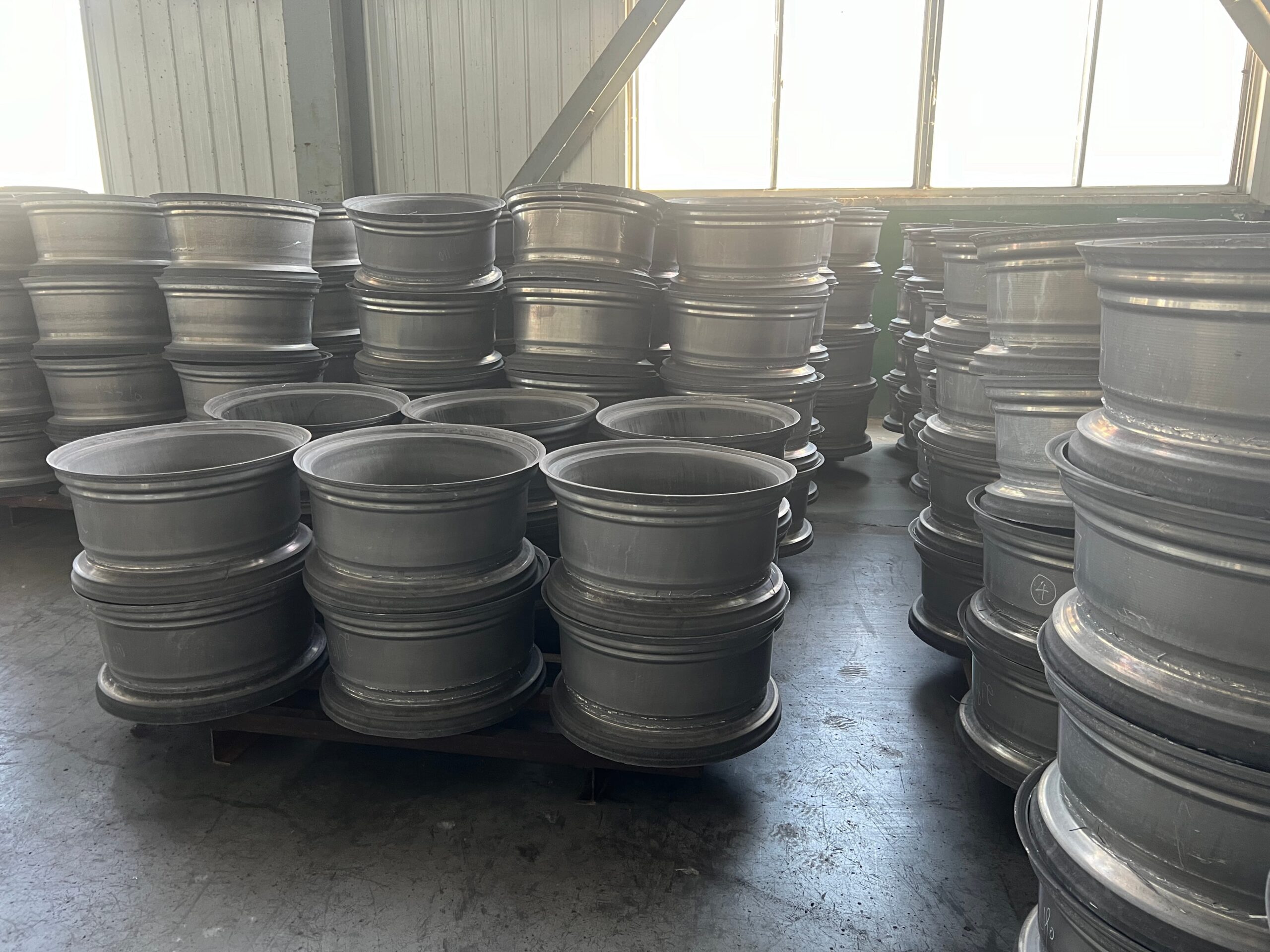
Every forged wheel starts as a solid billet. The alloy and the size of that blank set the material floor. 6061-T6 aluminum is the workhorse for street, show, and most performance builds. Magnesium alloys such as AZ80 and ZK60 cost more per kilogram and demand more careful machining, so forged magnesium wheels sit at a higher price point and are chosen when minimum weight is the priority. Larger diameters and wider barrels need a bigger blank and more metal removed, so a 22×11 costs more to produce than a 19×8.5 in the same alloy.
2. Construction type
Construction is one of the biggest single levers on price, because it changes both parts count and labor.
| Construction | What’s Involved | Cost Position |
|---|---|---|
| Monoblock | One forged billet, one machining program, no hardware or assembly | Lowest |
| 2-piece | Forged face + barrel + hardware + assembly and sealing | Mid |
| 3-piece | Face + outer lip + inner barrel + hardware + sealing + assembly | Highest |
A forged 2-piece wheel adds a separate barrel, assembly hardware, and sealing labor on top of the machined face, which is why it lands above a monoblock. A 3-piece adds a third component and more assembly again. If budget is the priority and the design allows it, a monoblock is the most cost-efficient starting point.
3. CNC machining time
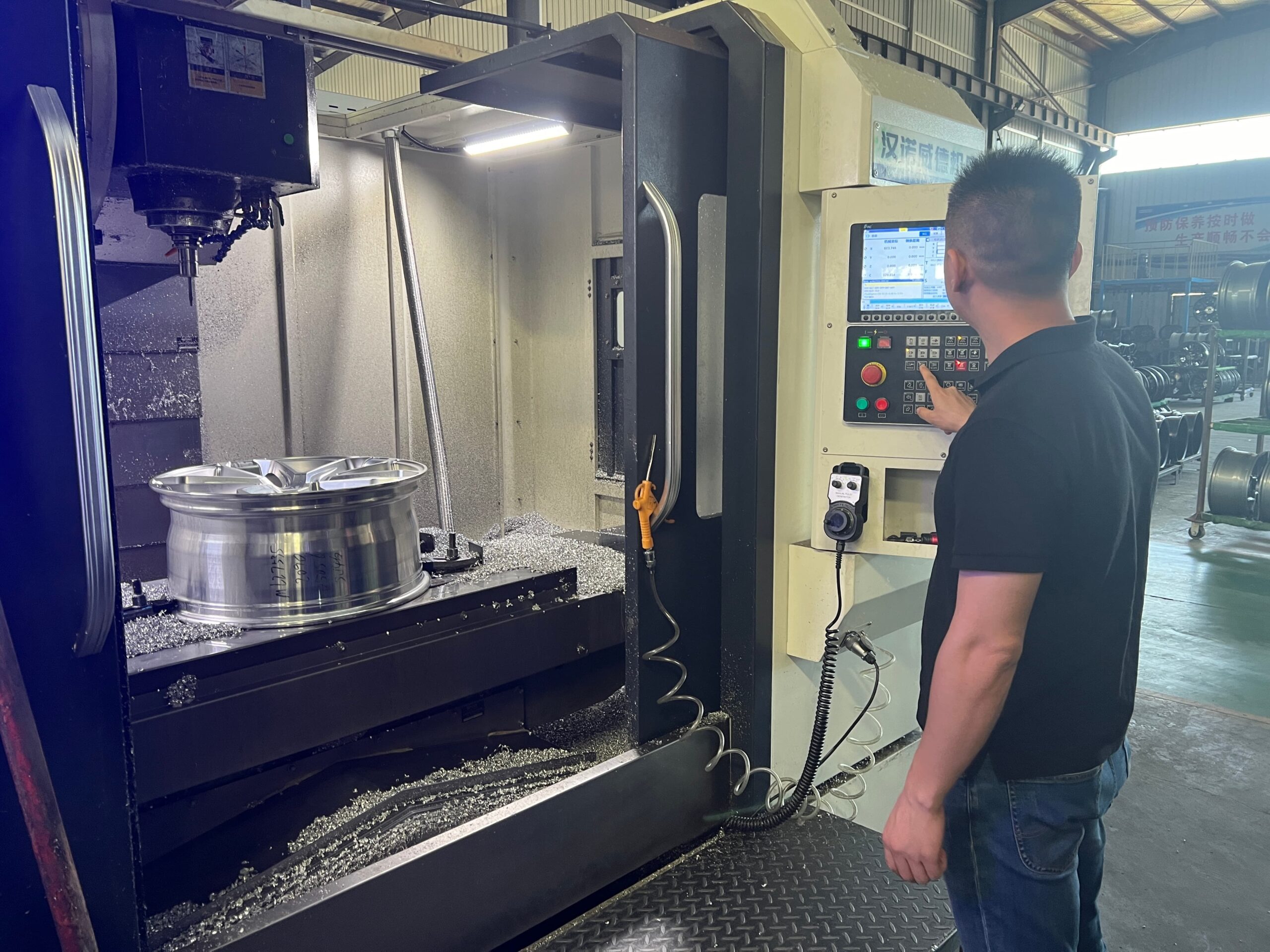
After the blank, machining is where the hours—and the cost—accumulate. A clean, open 5-spoke face cuts quickly. A deep-concave face with thin spokes, brake windows, stepped lips, or undercuts needs more passes, more axes, and more time on the machine. Two wheels of the same size and alloy can differ significantly in price purely because one face design takes twice the machining hours.
4. Surface finish
Finish is the most visible cost you control. A single-color painted or brushed finish is the baseline. Polished, chrome-look, brushed-and-tinted, or custom two-tone finishes add process steps and labor. If you have a target price, a proven finish is the easiest place to protect it without touching the wheel’s engineering.
5. Order quantity
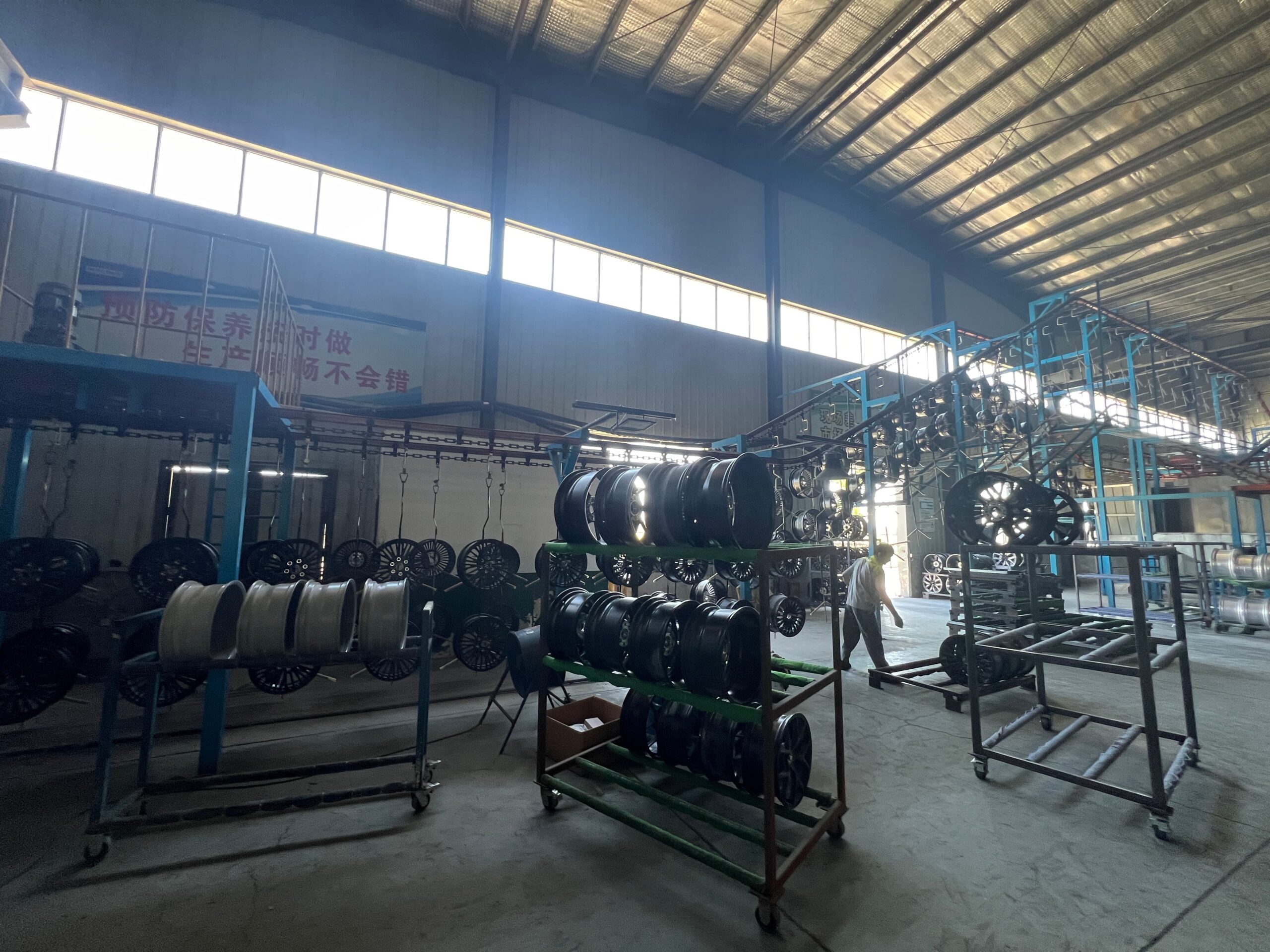
Because forged wheels are individually machined, most of their cost is per-piece rather than tooling. That means volume helps—larger runs spread setup, handling, and material planning across more wheels—but the discount curve is gentler than it is for cast wheels made from a reusable mould. Our MOQ is 4 pieces per design with mixed sizes allowed, so you can validate quality on a small run before scaling.
6. Testing, certification, and logistics
Standard quality checks are built into the price. Optional third-party TÜV/SGS testing is available on request and adds cost only if you require it. Finally, your Incoterm shapes the landed number: EXW shows the bare factory price, FOB adds inland freight and export handling, and CIF adds sea freight and insurance to your destination port.
What to Send Us for an Accurate Quote
A precise quote needs precise inputs. The more of the list below you provide, the tighter and faster the price back:
- Application — vehicle or use case
- Size — diameter × width (e.g., 20×10)
- PCD / bolt pattern — e.g., 5×112
- ET / offset
- Center bore (CB)
- Construction — monoblock / 2-piece / 3-piece
- Alloy — 6061-T6 aluminum or magnesium (AZ80/ZK60)
- Finish — reference photo welcome
- Quantity — per design; note staggered setups
- Destination port + Incoterm — EXW / FOB / CIF
Why Buyers Quote With FLEXIFORGED
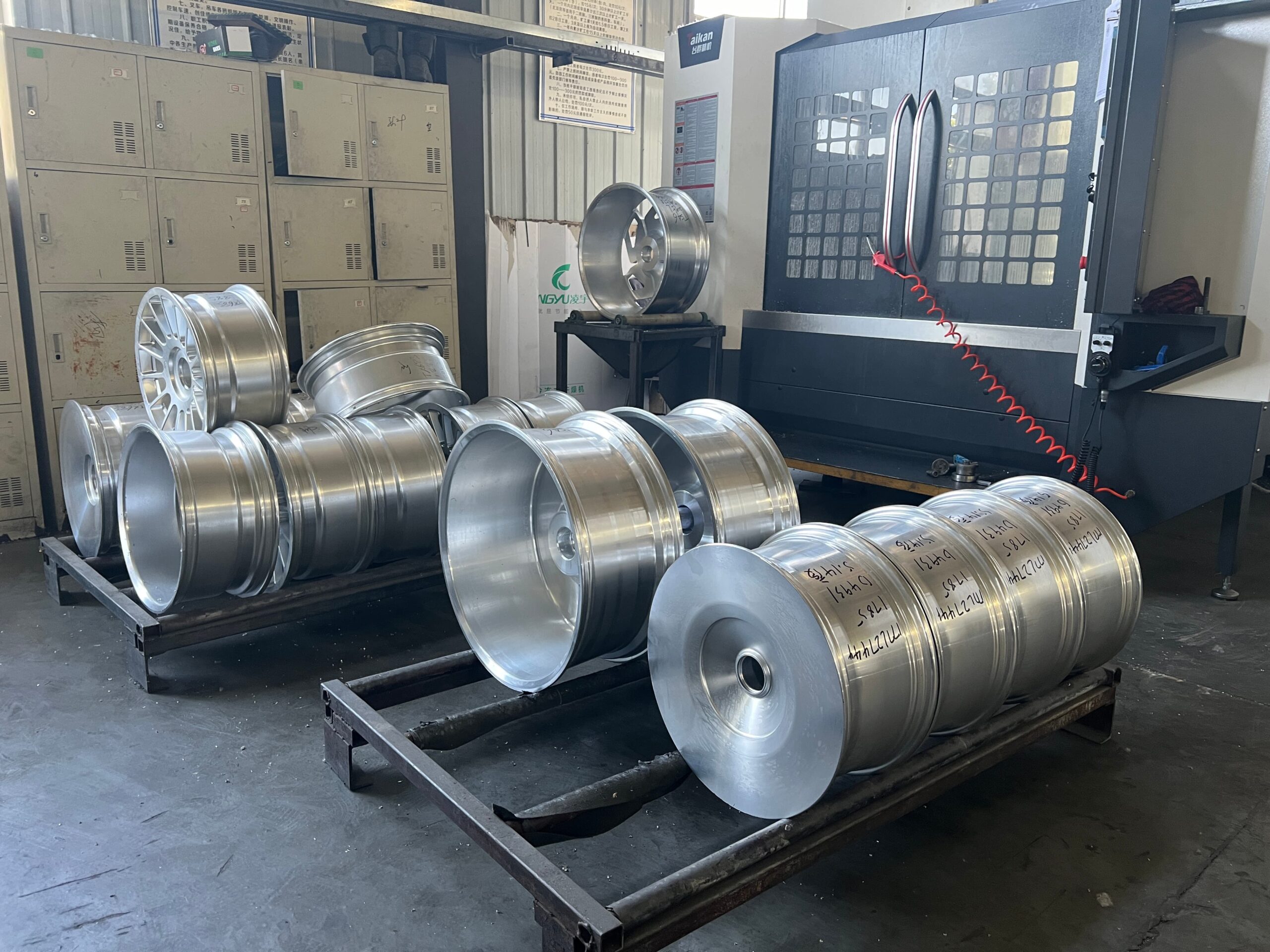
FLEXIFORGED is a factory-direct forged wheel manufacturer in Chongqing, China—not a trading company—so the price you see is the source price, without a middleman margin. We run 60+ CNC machines (3-, 4-, and 5-axis) with in-house forging and precision machining, work in 6061-T6 aluminum and AZ80/ZK60 magnesium, and are ISO and IATF certified, with third-party TÜV/SGS testing available on request. With an MOQ of 4 pieces and mixed sizes allowed, you can start small and scale as the program grows. Browse the full range on our custom forged wheels hub, then send your specs for a breakdown.
Frequently Asked Questions
Why are forged wheels more expensive than cast wheels?
Forged wheels start from a solid billet that is compressed under thousands of tons of pressure, then fully CNC-machined to shape. That process uses more raw material, more machine time, and tighter tolerances than casting, where molten alloy is poured into a mould. You pay for a denser, stronger, lighter wheel—not for a faster process.
Does a larger order lower my unit price?
Yes, but less dramatically than with cast wheels. Forged wheels are individually machined, so most of the cost is per-piece rather than tooling. Larger runs reduce setup and handling cost per wheel and improve material planning, so unit price drops with volume—just not as steeply as a mould-based product. Send your target quantity and we’ll show the price at each break.
What is your MOQ, and does a small order cost more per wheel?
Our MOQ is 4 pieces per design, and you can mix sizes (for example, a staggered front/rear setup). Small orders carry a higher per-wheel cost because setup and machining time are spread over fewer pieces. If you’re testing the market, 4 pieces lets you evaluate quality before committing to volume.
Do custom finishes and designs add a lot to the cost?
They can. A simple painted or brushed finish is the baseline; multi-stage finishes such as polished, chrome-look, or custom two-tone add labor and processing time. A complex face design with deep concavity, thin spokes, or undercuts also adds CNC time. Standard finishes and proven designs keep cost down; send your reference and we’ll quote both.
Is magnesium more expensive than aluminum?
Yes. Magnesium alloys such as AZ80 and ZK60 cost more per kilogram than 6061-T6 aluminum and require more careful machining and handling, so magnesium wheels sit at a higher price point. They’re chosen where minimum weight matters most, such as motorsport. For most street and show applications, 6061-T6 forged aluminum offers the best balance of strength, weight, and cost.
Can you quote EXW, FOB, and CIF?
Yes. We quote EXW Chongqing, FOB, or CIF to your destination port. EXW shows the bare factory price; FOB adds inland freight and export handling; CIF adds sea freight and insurance to your port. Tell us your destination port and preferred Incoterm and we’ll break the price down line by line.
Get a Line-by-Line Quote
Ready to see what your wheel actually costs? Send us the essentials and we’ll return a clear, itemized quote—no guesswork.
Send: Size × Width / PCD / ET / Quantity / Destination port / Email
Email: jackie.wei@flexiforged.com