To vet a forged wheel manufacturer properly, get five things in writing before you place an order: that the supplier owns its forging and CNC equipment rather than brokering it, the exact alloy and temper it uses, which construction types it builds in-house, which third-party test reports it can supply for your destination market, and how it counts MOQ and lead time. Almost every sourcing problem importers run into — a slipped ship date, a wheel that will not clear the caliper, a test report that belongs to a different factory — traces back to one of those five points being assumed instead of confirmed. The ten questions below are the ones that surface those problems while you can still walk away.
The Short Answer (TL;DR)
Ask a candidate forged wheel manufacturer these ten questions, in this order:
- Are you the factory, or a trading company?
- Which construction types do you build in-house — monoblock, 2-piece, 3-piece?
- What alloy and temper do you use, and can I see the material certificate?
- Is it genuinely forged? Walk me through the process route.
- Which test reports can you supply for my market?
- What is your MOQ, and are lead times calendar days or working days?
- What tooling and engineering fees apply, and who owns the design?
- How do you handle fitment data and drawing approval?
- What happens when something is wrong — QC, defect and warranty terms?
- What Incoterms, packing and export documents do you provide?
Score the answers against the table further down. A supplier that answers eight or more clearly, in writing, on the first pass is worth sampling. One that deflects on questions 1, 4 or 5 is usually a trading company or a subcontracted job shop.
Why Vetting Matters More for Forged Wheels Than for Most Parts
Forged wheels sit in an awkward gap. They are a safety-critical structural component, but in most markets they are also an aftermarket accessory, which means the regulatory floor is lower than it is for OEM parts. That gap is where weak suppliers live. A polished website, a rendered catalogue and a low FOB price can be assembled by anyone with a laptop; a 6,000-tonne press, a heat-treatment line and a CNC hall cannot.
The commercial risk is asymmetric too. Your capital is tied up for weeks before you see a wheel, your customer has already been quoted a delivery date, and a batch that fails inspection at destination is effectively worthless — you cannot resell a structurally suspect wheel. Ten questions at the start cost you an afternoon. Getting them wrong costs a season.
The 10 Questions to Ask a Forged Wheel Manufacturer
1. Are you the factory, or a trading company?
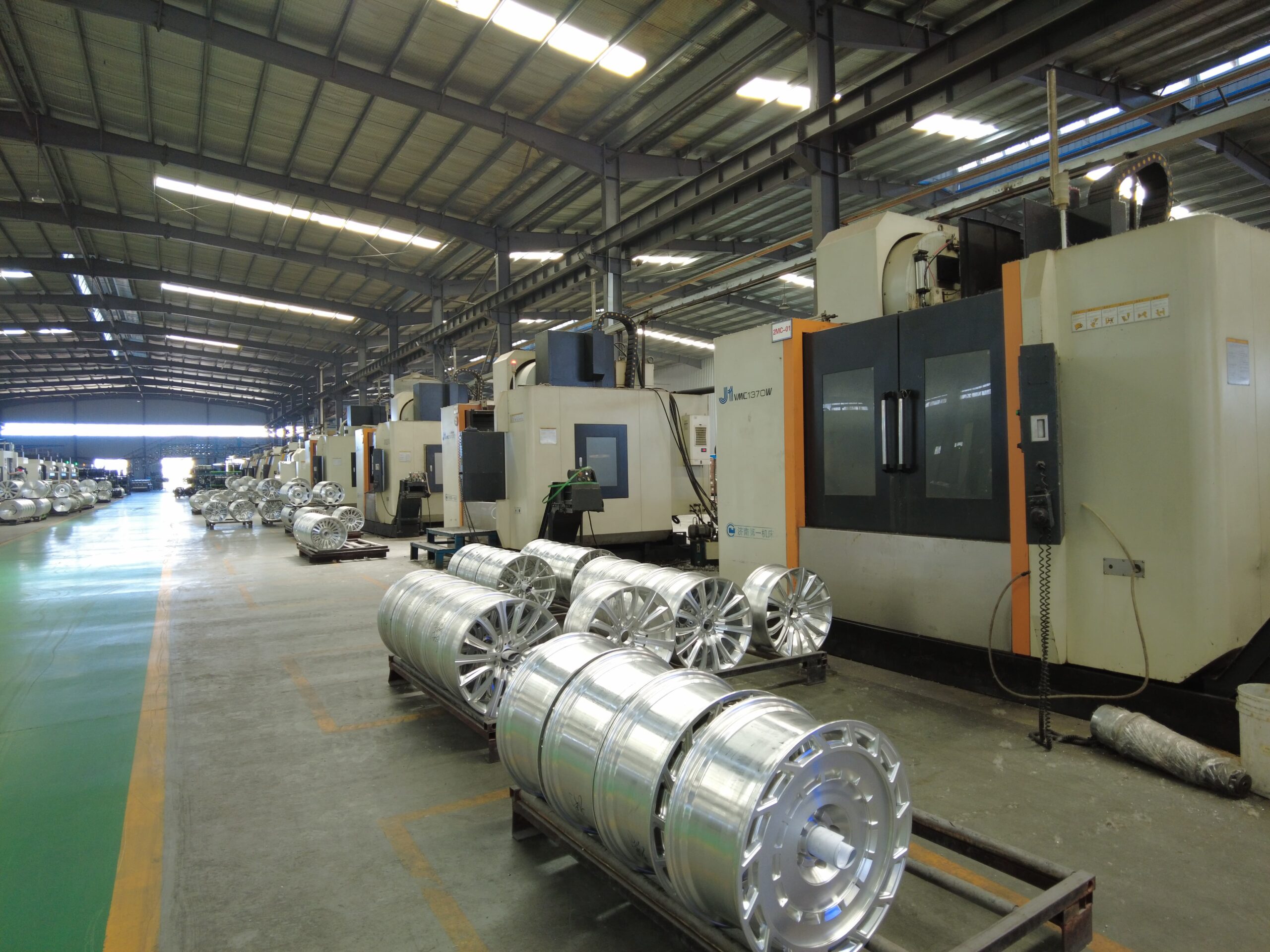
Both can work, but you need to know which you are dealing with, because it changes who controls your delivery date. Ask for a live, unedited video walk-through — press, machining hall, QC room, in one continuous take — and ask them to show the machine control panel with the current job on screen. Then cross-check three documents: the business licence scope, the address on the commercial invoice, and the address on any test report they send. Those three should match.
Good answer: a same-day video, a licence that lists manufacturing, and consistent addresses. Red flag: only edited marketing footage, a 48-hour delay on every technical question, or test reports issued to a company name you have never heard of.
2. Which construction types do you build in-house?
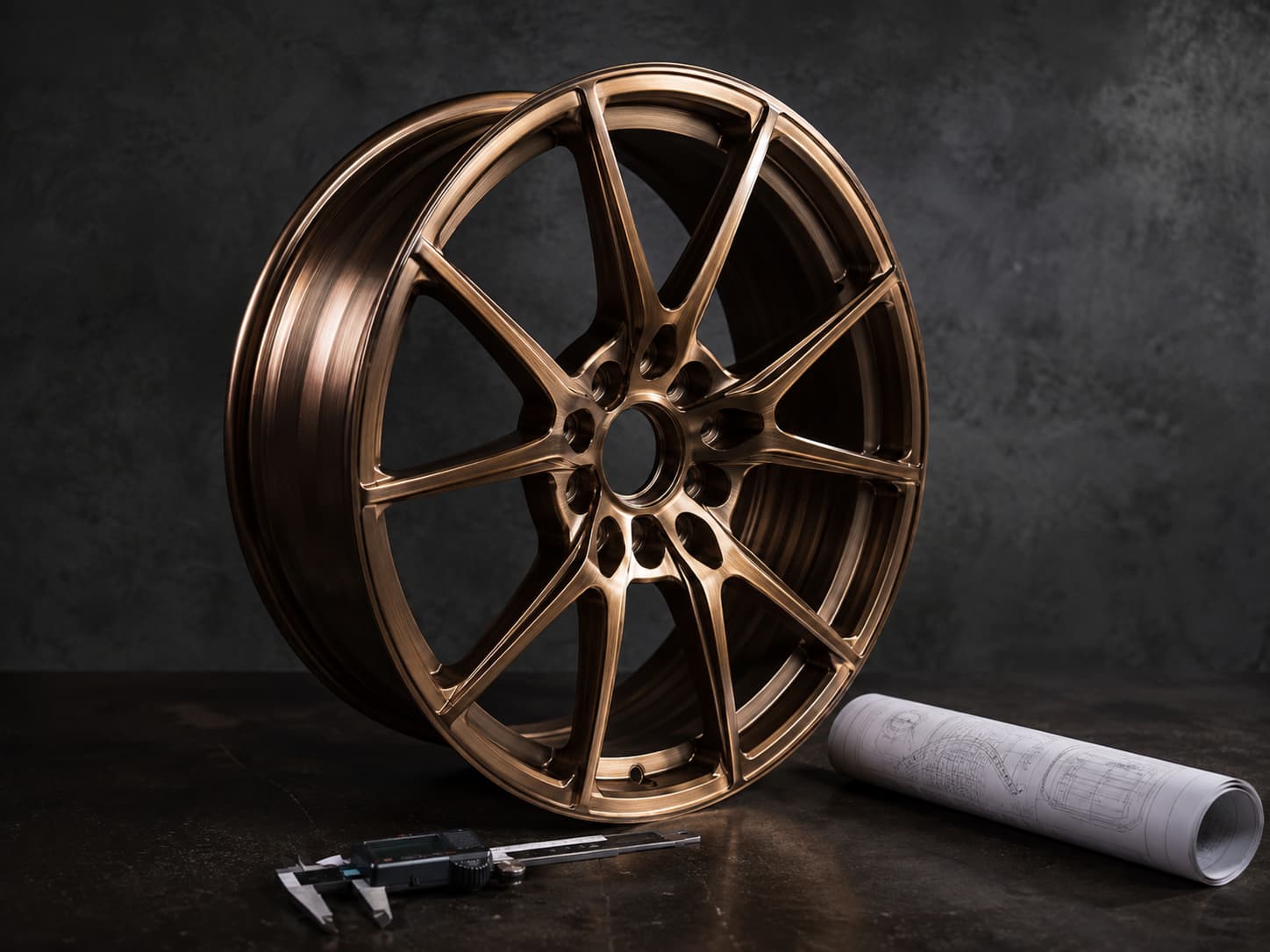
Monoblock, 2-piece and 3-piece are different production disciplines, not different sizes of the same job. Plenty of suppliers list all three and subcontract two of them. Ask which are built on their own floor and which are outsourced — a straight answer here is a strong honesty signal, because the honest answer is rarely "all of them". If you are still deciding which construction fits your programme, our breakdown of forged monoblock wheels covers where each one earns its cost.
Good answer: a clear in-house list plus an explanation of what happens to the rest. Red flag: "we can do everything" with no detail.
3. What alloy and temper, and can I see the material certificate?
"Aluminium" is not an answer. You want the alloy designation and the temper — 6061-T6 is the industry workhorse for forged car wheels; AZ80 and ZK60 are magnesium alloys used where weight matters more than cost and durability trade-offs are understood. Ask for the mill certificate for the billet lot used on your order, not a generic sample from two years ago.
Good answer: a specific designation, a lot-traceable certificate, and a willingness to explain why that alloy suits your application. Red flag: vague grades, or a certificate with the lot number blanked out.
4. Is it genuinely forged? Walk me through the process route.
This is the question that separates real forging from marketing. Flow-formed and gravity-cast wheels are sometimes sold as "forged-grade", which means nothing. Ask the supplier to describe the route in sequence: billet cut, heating, press forging, heat treatment and ageing, then CNC machining, then finishing. Ask what press tonnage is used and how heat treatment is controlled and recorded. Anyone who actually forges can answer in thirty seconds.
Good answer: a step-by-step route with equipment named and heat-treat records available. Red flag: the conversation jumps straight from "aluminium" to "CNC" with no forming step in between.
5. Which test reports can you supply for my market?
Requirements differ by destination, so state your market first and let the supplier respond to it. In the EU, replacement passenger-car wheels are commonly homologated under ECE R124, and Germany additionally recognises TÜV part certificates; Japan works on the JWL mark with VIA as a voluntary layer; Australia works through the ADR framework; the United States has no federal homologation for aftermarket wheels, so buyers typically fall back on SAE J2530 testing as the commercial benchmark. Confirm the current requirement for your market with your own compliance advisor — these frameworks change. What you are testing here is whether the supplier knows the difference between a mandatory approval and a voluntary test, and whether it can produce reports in its own name.
Good answer: a distinction between mandatory and optional, plus a quoted cost and timeline for third-party testing. Red flag: "we have all certificates", or reports where the applicant name does not match the factory.
6. What is your MOQ, and are lead times calendar or working days?
This one catches more people than it should. A supplier quoting "30 days" in working days is quoting roughly six weeks; the same number in calendar days is a month. On a 40-day job the gap is about two weeks — enough to miss a season. Ask for the count basis explicitly, ask what starts the clock (almost always drawing approval, not PO date), and ask what happens in the peak months before the European and North American fitting seasons.
Good answer: a stated basis, a stated trigger, and honesty about peak-season queueing. Red flag: a single number with no basis, or a promise that never moves regardless of order size.
7. What tooling and engineering fees apply, and who owns the design?
For a private-label programme this is the clause that matters most twelve months later. Agree in writing who owns the CAD, whether the supplier may sell your design to another buyer, how long any exclusivity runs, and what happens to tooling if you move production. Put ownership, exclusivity and the tooling fee in the same document, not in three separate emails.
Good answer: a written IP and exclusivity clause offered before you ask twice. Red flag: "don’t worry, we are friends".
8. How do you handle fitment data and drawing approval?
You should receive a dimensioned drawing or 3D file to approve before anything is cut, showing PCD, ET, centre bore, face profile and the caliper clearance envelope. Ask how they verify clearance for the specific brake package, how they handle TPMS, and whether they will flag a spec that looks wrong rather than silently building it. A supplier that pushes back on a bad ET is worth more than one that agrees with everything.
Good answer: a formal approval step with a revision trail. Red flag: production starting from a screenshot and a WhatsApp message.
9. What happens when something is wrong?
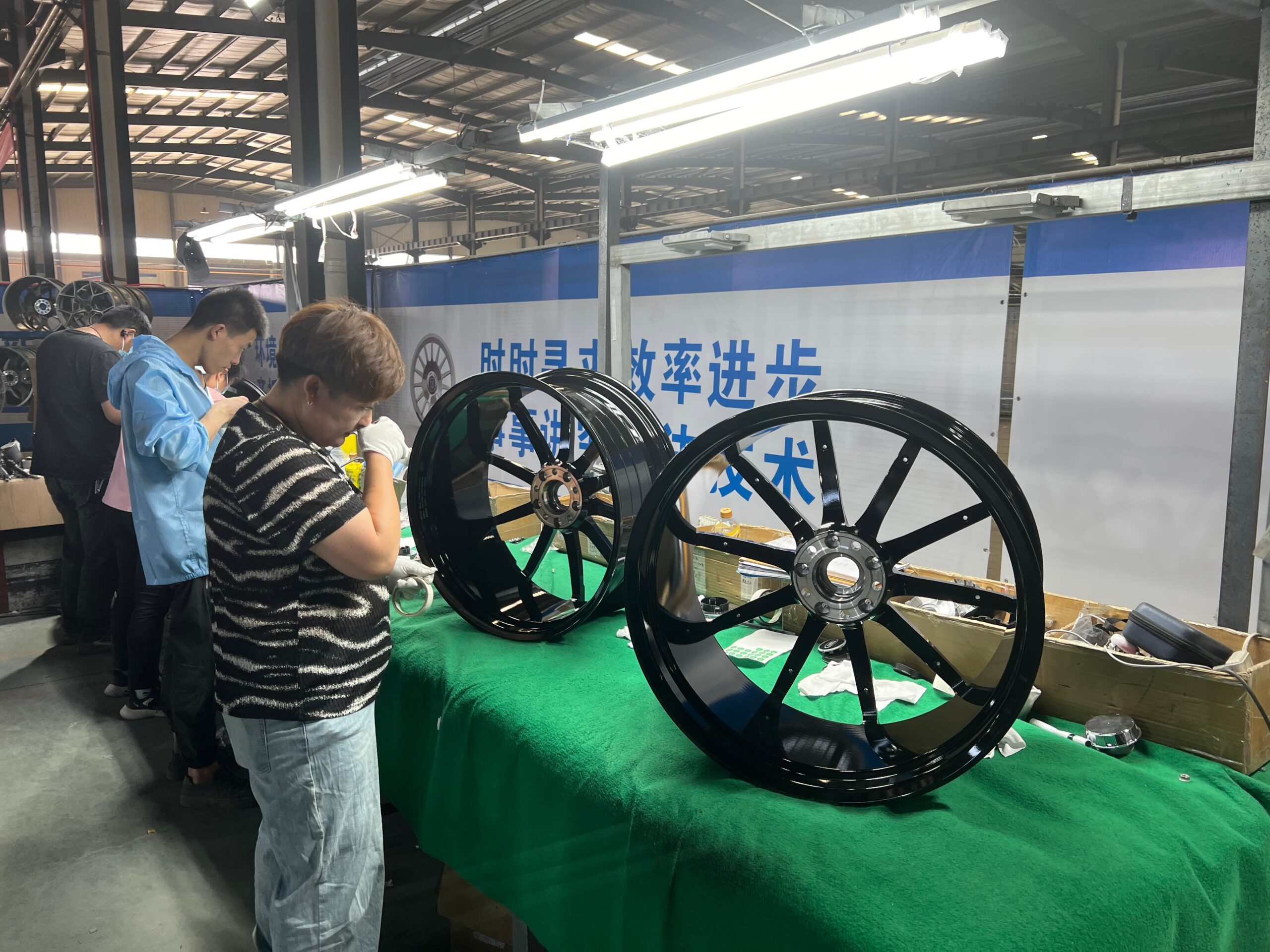
Ask before you need to know. What is inspected on every wheel versus by sample? Are runout, balance, hardness and finish adhesion recorded per batch? What is the remedy for a cosmetic defect found at destination — credit, replacement in the next shipment, or nothing? Get the remedy written into the pro forma invoice.
Good answer: a documented inspection sheet per batch and a stated remedy. Red flag: quality talked about as a philosophy rather than a record.
10. What Incoterms, packing and export documents do you provide?
Compare landed cost, not factory price. Ask for the same order quoted EXW, FOB and CIF so you can see what the supplier is actually absorbing. Confirm the HS code they will declare — forged aluminium car wheels normally fall under HS 8708.70 — and ask how wheels are packed, since freight damage on a poorly packed pallet erases any price advantage.
Good answer: parallel quotes and a clear packing spec. Red flag: reluctance to quote anything but EXW, or a suggested HS code chosen to reduce duty.
Supplier Scorecard: Green Light vs Red Flag
Use this as a working sheet during supplier calls. Mark each row before you request samples.
| Question | Green light | Red flag |
|---|---|---|
| 1. Factory or trader | Live unedited plant video on request; licence, invoice and report addresses match | Only marketing footage; every technical reply takes 48 hours |
| 2. Construction types | Names what is in-house and what is outsourced | Claims everything in-house with no detail |
| 3. Alloy and temper | 6061-T6 or a named magnesium alloy, with a lot-traceable mill certificate | "Aircraft-grade aluminium", no designation, no certificate |
| 4. Forging process | Full route described, press tonnage named, heat-treat records kept | No forming step described between billet and CNC |
| 5. Testing and approvals | Distinguishes mandatory from voluntary; quotes cost and timeline | "We have all certificates"; applicant name differs from factory |
| 6. MOQ and lead time | States calendar vs working days and what starts the clock | One fixed number regardless of order size or season |
| 7. Tooling and IP | Written ownership and exclusivity clause offered up front | Verbal assurances only |
| 8. Drawing approval | Dimensioned drawing or 3D approval with a revision trail | Production from a screenshot; no clearance check |
| 9. QC and remedy | Per-batch inspection records; written defect remedy | Quality described only in adjectives |
| 10. Trade terms | EXW / FOB / CIF quoted side by side; clear packing spec and HS code | EXW only; HS code chosen to reduce duty |
What to Send So Suppliers Can Answer Properly
Half of the vague answers buyers receive are caused by vague enquiries. If you send the following, a serious forged wheel manufacturer can come back with a real quotation and a real schedule instead of a price range.
| Item | Example | Why it changes the quote |
|---|---|---|
| Size × width | 20×9.0 front / 20×10.5 rear | Drives billet size, machining time and price band |
| PCD | 5×112 | Determines hub face design and fastener seat |
| ET (offset) | ET35 front / ET28 rear | Controls caliper clearance and arch fitment |
| Centre bore & brake package | CB 66.6, 6-piston front caliper | Decides whether the spoke profile needs modifying |
| Construction & finish | Monoblock, brushed bronze | Sets lead time band and finishing cost |
| Quantity & destination port | 40 sets, Hamburg | Sets unit price tier and freight basis |
How FLEXIFORGED Answers These Ten Questions
It would be strange to publish a vetting checklist and not answer it ourselves, so here it is in plain terms.
FLEXIFORGED is the wheel brand of FlexiTech International LLC, established in 2017 in Chongqing, China. We are a manufacturer, not a trading company: forging and precision machining run on our own floor with 60+ CNC machines across 3, 4 and 5-axis configurations, and plant walk-throughs are available on request. Monoblock and 2-piece construction are confirmed in-house; for 3-piece programmes, send us the specification and we will scope it honestly rather than guess. You can read more about the company on our about page.
Materials are 6061-T6 aluminium and AZ80 or ZK60 magnesium, with mill certificates available for your lot. We operate under ISO and IATF certified quality systems, and third-party TÜV or SGS testing can be arranged on request — we will tell you which tests your destination market actually requires and which are optional, rather than implying we hold approvals we do not.
MOQ is 4 pieces per design and you may mix sizes within an order. Lead times are quoted in calendar days from drawing approval: samples 10–15 days, monoblock production 25–30 days, 2-piece 35–40 days, and 3-piece 40–45 days. Wheels are declared under HS 8708.70 and quoted EXW, FOB or CIF into EU, North American, Australian and South African ports. Our full range of custom forged wheels starts from your drawing, not from a fixed catalogue.
Frequently Asked Questions
How do I know if a supplier is a real factory or a trading company?
Ask for a live video walk-through of the forging area, the CNC hall and the QC room in one continuous take, and ask them to show the machine control panel with the current job on screen. A trading company cannot do this on short notice. Also cross-check the business licence scope, the address on the invoice against the address on the test reports, and whether technical answers come back the same day or take 48 hours to relay. FLEXIFORGED runs its own forging and machining in Chongqing, China, with 60+ CNC machines in 3, 4 and 5-axis configurations.
What’s your MOQ?
4 pieces per design, and you can mix sizes within one order, for example a staggered 20×9 front and 20×10.5 rear set. There is no requirement to buy a full container to start a programme.
How long does production take?
Counted in calendar days from drawing approval: samples 10-15 days, monoblock production 25-30 days, 2-piece 35-40 days, and 3-piece 40-45 days. Always confirm whether a supplier is quoting calendar days or working days, because on a 40-day job the difference is roughly two weeks.
Can you provide TUV or SGS test reports?
Yes, third-party testing through TUV or SGS can be arranged on request, and the cost and timeline depend on the test package and the number of designs. FlexiTech International LLC also operates under ISO and IATF certified quality systems. Tell us your destination market first, because which tests are mandatory and which are optional depends on where the wheels will be sold.
Who owns the design if you develop a custom wheel for us?
Agree this in writing before tooling starts. For private-label programmes our standard position is that the customer’s own design and brand remain the customer’s property, and we do not offer that design to other buyers. Put the ownership clause, the exclusivity period and the tooling fee into the same document.
Which Incoterms and HS code do you work with?
We quote EXW, FOB or CIF, and forged aluminium car wheels are normally classified under HS 8708.70. Send us your destination port and we will quote the terms side by side so you can compare landed cost rather than factory price alone.
Ready to Put Us Through the Same Ten Questions?
Send your specification and we will come back with a written answer to every point above, plus a quotation and a production slot. Email jackie.wei@flexiforged.com with:
- Size × width
- PCD
- ET
- Quantity
- Destination port
- Your email
Drawings, photos or even a competitor’s spec sheet are enough to start.