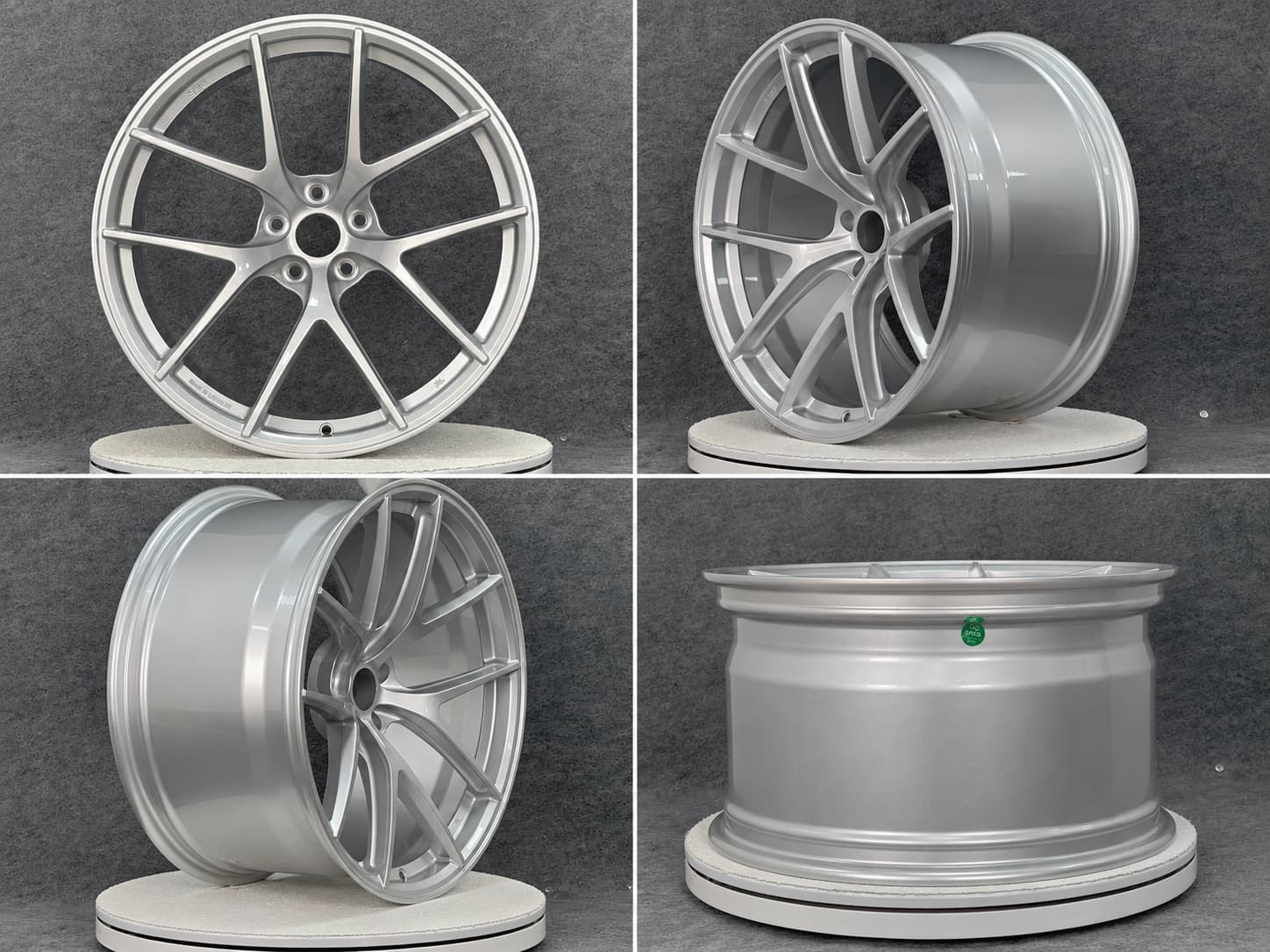
For custom forged wheels, FLEXIFORGED’s MOQ is 4 pieces per design (mixed sizes allowed), samples take 10-15 calendar days, and production runs 25-30 calendar days for monoblock, 35-40 for 2-piece and 40-45 for 3-piece counted from drawing approval — while unit price is driven mainly by construction type, diameter and width, material, design complexity, finish, and quantity per SKU, not by a single list price. Forged wheels are made to order from solid billet, so every quote is built from your drawing and your fitment data. This guide explains how each of those three variables actually works, so you can plan orders, quote your own customers, and send an RFQ that comes back with a real number instead of a range.
The Short Answer (TL;DR)
- MOQ: 4 pcs per design — one car set. You can mix sizes inside that set (staggered front/rear is normal, not an upcharge trigger by itself).
- Lead time: 10-15 calendar days for samples. Production is counted from drawing approval and depends on construction — 25-30 calendar days monoblock, 35-40 for 2-piece, 40-45 for 3-piece. Optional third-party testing and ocean freight sit outside those windows.
- Pricing: No catalogue price exists for a custom program. Price is quoted per design from billet size, machining hours, material, and finish. Quantity per SKU is what moves the unit price most, because it amortises setup and programming.
- To get a firm quote you need six data points: Size × Width, PCD, ET, Quantity, Destination port, Email.
What MOQ Actually Means for Forged Wheels
MOQ on a forged wheel is not a warehouse rule — there is no shelf stock to draw down. Each wheel starts as a 6061-T6 aluminium (or AZ80/ZK60 magnesium) billet that is forged, then cut on 3/4/5-axis CNC machines. Once a design is programmed and the fixtures are set, running four pieces is viable. That is why our floor is a single car set rather than a container.
| Order scenario | MOQ | What to know |
|---|---|---|
| One design, one size | 4 pcs | Standard single car set. Most common test order. |
| Staggered front/rear | 4 pcs total | Mixed sizes allowed inside the set (e.g. 20×9 front / 20×10.5 rear). |
| Same design, several PCD/ET variants | 4 pcs per variant set | Each fitment variant needs its own machining setup — quote each separately. |
| Multiple designs in one shipment | 4 pcs per design | Consolidate designs into one booking to spread freight cost. |
| Magnesium (AZ80 / ZK60) | 4 pcs | Billet availability and coating spec confirmed at quoting stage. |
The practical read for a wholesaler: a 4-pc MOQ lets you validate a design with one real customer before you commit to a volume program. It does not mean 4 pcs is the efficient quantity — see the pricing section below.
Lead Time: Sample Stage vs Production Stage
Two clocks matter, and they run at different speeds. Samples are 10-15 calendar days. Production is counted from drawing approval — not from the day you first email us — and it scales with how many parts the wheel is made of. A monoblock is one billet, one program, one finish line. A 2-piece adds a separately machined barrel, hardware and assembly. A 3-piece adds a second barrel half and a second seal. Each added part adds days.
Every lead time in this article is stated in calendar days, not working days. That distinction is worth checking on any quote you receive: a “30 day” quote in working days is roughly six weeks on your calendar, while 30 calendar days is a little over four. We quote calendar days so the number you plan around is the number you actually wait.
Production lead time by construction
| Construction | Production lead time (from drawing approval) | Why it takes that long |
|---|---|---|
| Monoblock | 25-30 calendar days | Single 6061-T6 billet: forge → CNC → finish. Fewest handoffs, fastest route to port. |
| 2-piece | 35-40 calendar days | Face and barrel are machined as separate programs, then bolted, sealed and trued. Roughly two extra weeks over monoblock. |
| 3-piece | 40-45 calendar days | Inner and outer barrel halves plus the face — more parts, more hardware, more assembly and sealing. Quoted per project: send specs and we will scope it. |
Two things wholesalers should take from this table. First, construction is a delivery decision as much as a styling one — if your customer needs wheels for a show date, monoblock buys you two to three weeks. Second, these windows start at drawing approval, so every revision round pushes the whole chain back by the length of that round. See forged monoblock wheels and forged 2-piece wheels for what each construction actually gives you in return for the time.
The full timeline, stage by stage
| Stage | Duration | Who controls it |
|---|---|---|
| Spec confirmation & CAD/drawing approval | Varies with design complexity and revision rounds | Buyer + FLEXIFORGED engineering |
| Sample production (forge → CNC → finish) | 10-15 calendar days | FLEXIFORGED |
| Sample review / test fit at your end | Your call | Buyer |
| Mass production, from drawing approval | 25-45 calendar days depending on construction — see table above | FLEXIFORGED |
| Third-party testing (TÜV / SGS), if required | Lab schedule; quoted case by case | Independent lab |
| Ocean freight to destination port | Route and carrier dependent | Forwarder (EXW / FOB / CIF) |
Where programs actually slip is almost never the machining. It is drawing revisions and late fitment data. If PCD, ET and centre bore are confirmed before we cut a sample, the 10-15 day window holds. If those change after the sample, the clock restarts.
How to compress the timeline
- Send complete fitment data with the RFQ, not after the quote.
- Approve the drawing in one round — consolidate internal feedback before replying.
- Decide on certification requirements at quoting, not after production.
- Book freight in parallel with the last production week, not after packing.
What Actually Drives Forged Wheel Pricing
There is no price list for custom forged wheels, and any supplier who gives you a firm number before seeing your drawing is quoting a different product than the one you will receive. Price is built bottom-up from billet size, machining hours, material, and finish labour. Below is how each factor moves the unit cost, in relative terms.
| Cost driver | Why it moves price | Relative impact |
|---|---|---|
| Construction (monoblock vs 2-piece) | 2-piece adds a separate barrel, hardware, sealing and assembly labour | High |
| Diameter & width | Larger billet, more material removed, more machine hours | High |
| Material (6061-T6 vs AZ80 / ZK60 magnesium) | Magnesium billet cost, handling and mandatory protective coating | High |
| Design complexity (spoke count, undercuts, concave depth) | Drives 5-axis machining time and tool wear | Medium-High |
| Quantity per SKU | Setup, programming and fixture cost is amortised across the run | Medium-High |
| Finish (painted, brushed, polished, two-tone) | Multi-step and two-tone finishes add labour and rework risk | Medium |
| Third-party testing (TÜV / SGS) | Destructive samples plus lab fees; usually a one-off per design family | Medium (one-time) |
| Packaging & buyer branding | Custom cartons, inserts, labels | Low-Medium |
| Incoterm (EXW / FOB / CIF) | Changes what is inside the number, not what the wheel costs to make | Varies |
How unit price behaves as quantity rises
The setup cost for a forged design — programming, fixtures, first-article checks — is largely fixed per SKU. Spreading it over more pieces is the single cleanest lever a wholesaler has on unit price.
| Quantity per design | What it is good for | Unit price trend |
|---|---|---|
| 4 pcs (MOQ) | Validation, one customer car, showroom sample | Highest — setup carried by one set |
| Small repeat batches | Testing demand on a design before committing | Lower — setup already proven, programming reused |
| Volume program, one design family | Stocking a size range you know sells | Lowest — full amortisation across the run |
Two practical notes. First, repeat orders of a design we have already run are cheaper than a first run of the same quantity, because the programming exists. Second, consolidating your range around fewer designs in more sizes usually beats spreading the same spend across many one-off designs.
Why forged quotes sit above cast quotes
A cast wheel is poured into a mould; the mould is expensive but the per-piece cost afterwards is low, which is why cast pricing looks attractive at volume and why cast suppliers ask for high MOQs. A forged wheel is cut from solid billet, so most of the cost is machine time on every single piece. That inverts the economics: forging gives you a 4-pc MOQ and full design freedom, but the unit price will not collapse the way cast does at scale. If you are comparing quotes, compare like for like — construction, material, and finish — before comparing numbers. Our custom forged wheels hub covers the construction options in more detail.
Total Landed Cost, Not Just Unit Price
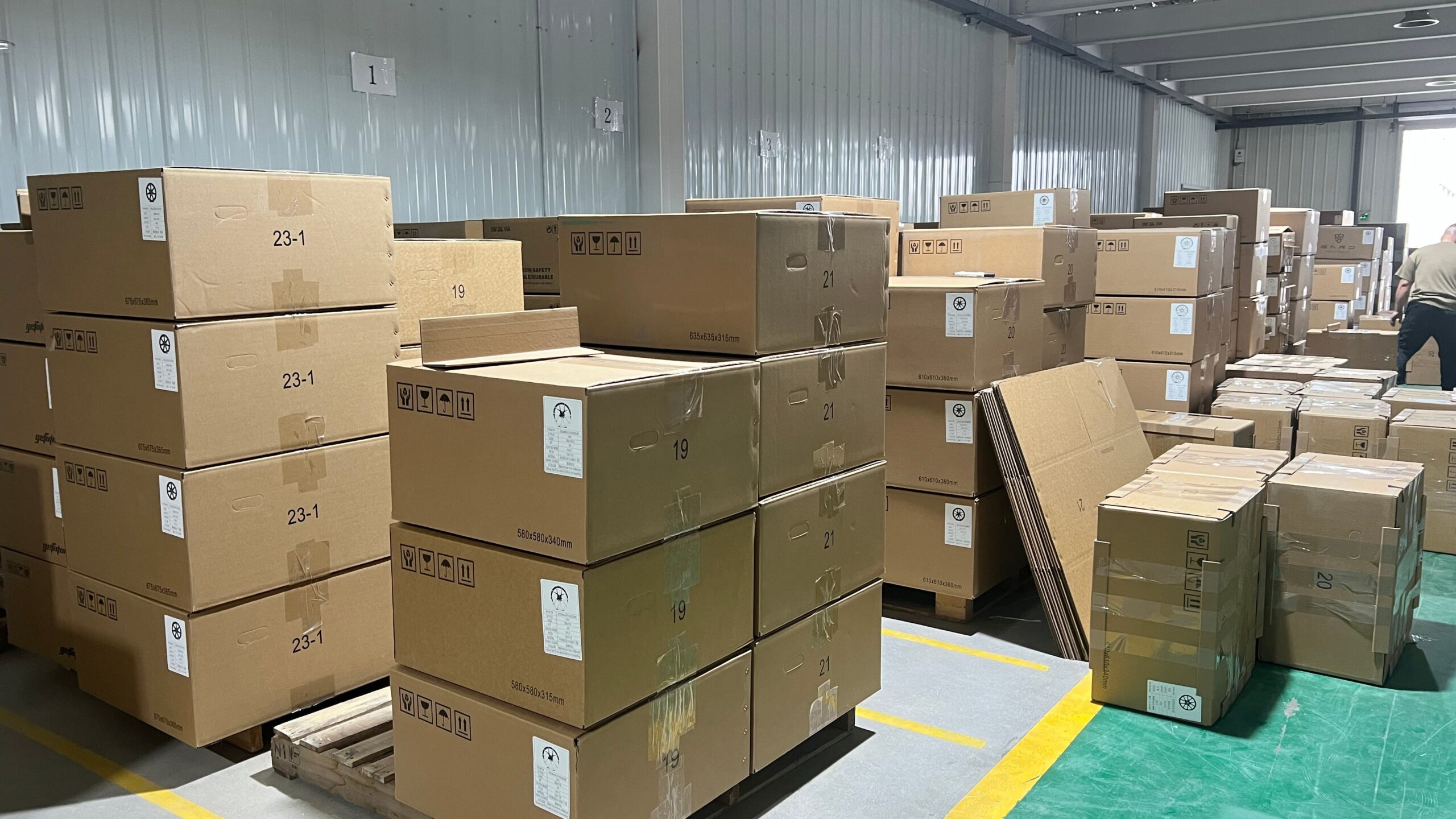
Wholesalers get caught out by comparing an EXW number to a CIF number. They are not the same figure. Forged aluminium road wheels classify under HS 8708.70, and we quote EXW, FOB or CIF into the EU, North America, Australia and South Africa.
- EXW — price at our Chongqing facility. You control the forwarder and carry inland, export clearance and freight.
- FOB — we handle inland transport and export clearance to the port; you take over from the vessel.
- CIF — freight and insurance to your destination port are included in our number. Easiest to compare against a domestic supplier.
Add your own duty, port charges and inland delivery on top to reach a true landed cost per wheel, then compare. A quote that looks 10% higher on FOB can land cheaper once packing density and damage rates are accounted for.
What to Send Us to Get a Real Quote
Most RFQ delays come from missing data, not from pricing. Send these and we can quote from the drawing rather than from assumptions.
- Size × Width — e.g. 20×9 front, 20×10.5 rear
- PCD / bolt pattern — e.g. 5×112, 5×120
- ET (offset) — per size, front and rear if staggered
- Centre bore — and whether you need hub-centric rings
- Construction — monoblock or 2-piece
- Material — 6061-T6 aluminium, or AZ80 / ZK60 magnesium
- Finish — colour code or reference photo
- Quantity per design — and whether it is a test order or a repeat program
- Destination port — and preferred Incoterm
- Certification needs — whether TÜV/SGS third-party testing is required for your market
- Design file — CAD, or reference images if we are drawing it for you
Why the Numbers Look Like This at FLEXIFORGED
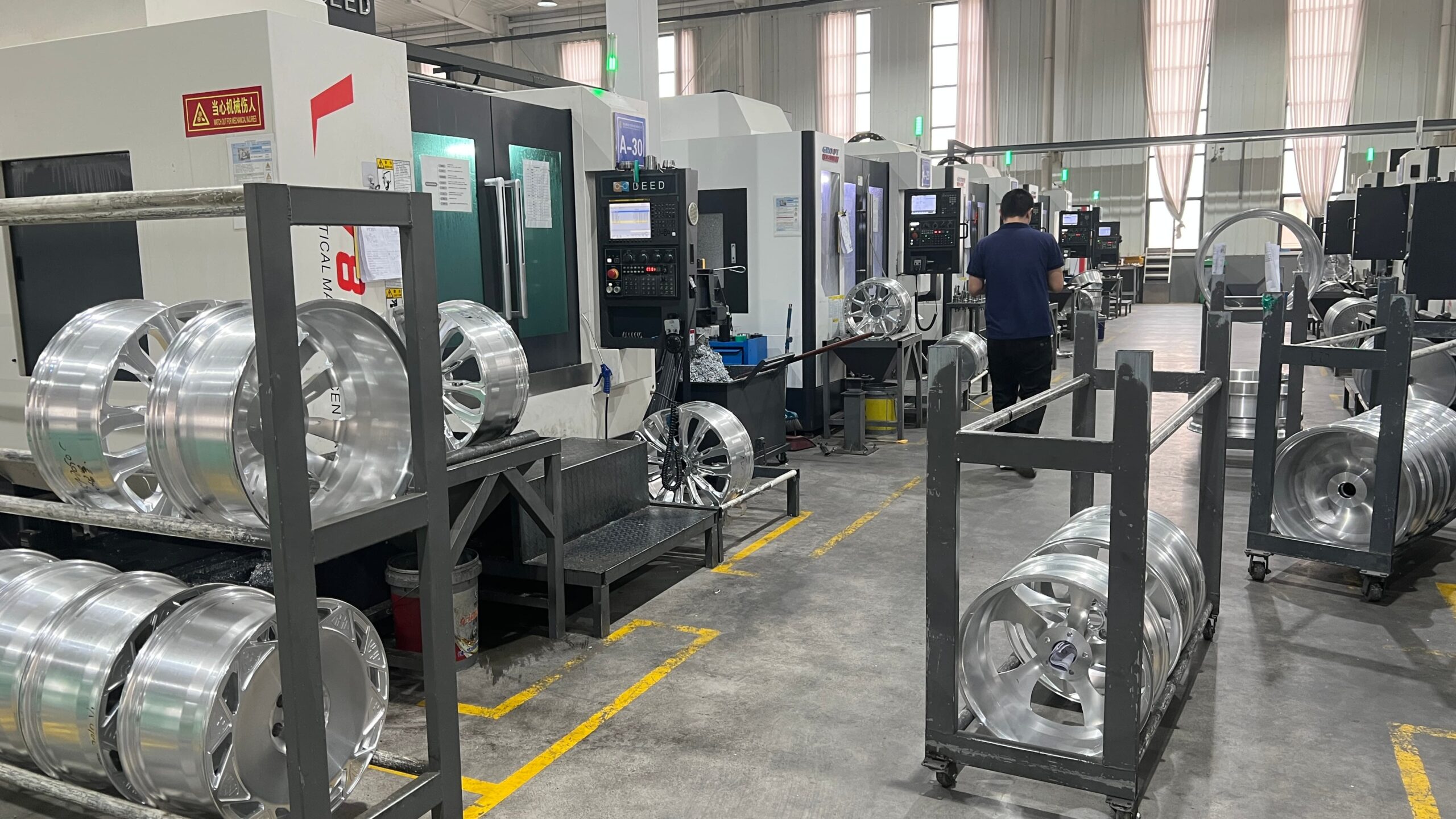
FlexiTech International LLC has run the FLEXIFORGED program from Chongqing, China since 2017. We forge and finish in-house on 60+ CNC machines (3, 4 and 5-axis) — we are a factory, not a trading company, which is the reason a 4-pc MOQ and a 10-15 calendar-day sample window are possible at all. A trading house has to buy a slot from someone else’s line; we schedule our own.
- Materials: 6061-T6 aluminium; AZ80 and ZK60 magnesium for weight-critical programs.
- Quality systems: ISO and IATF. Third-party TÜV / SGS testing available on request when your market requires it.
- Trade: HS 8708.70, EXW / FOB / CIF, shipping to the EU, North America, Australia and South Africa.
- Flexibility: mixed sizes inside the MOQ, so a staggered set is one order, not two programs.
You can read more about the facility and the team on our about page.
FAQ
What’s your MOQ for forged wheels?
4 pieces per design — one car set. You can mix sizes inside that set, so a staggered front and rear fitment still counts as a single 4-piece order.
How long does a sample take, and how long is production?
Samples take 10-15 calendar days. Production is counted from drawing approval and depends on construction: 25-30 calendar days for monoblock, 35-40 calendar days for 2-piece, and 40-45 calendar days for 3-piece. Optional third-party testing and ocean freight sit outside those windows and are planned separately.
Why does a 2-piece wheel take longer than a monoblock?
A monoblock is cut from one billet, so it moves through one program and one finish line. A 2-piece has a face and a barrel machined as separate parts, then bolted, sealed and trued — roughly two extra weeks. A 3-piece adds a second barrel half and a second seal on top of that. If your customer has a deadline, construction is a delivery decision as much as a styling one.
Can I mix different sizes and offsets in one order?
Yes for sizes within one design and one car set. Different PCD or ET variants need their own machining setup, so each fitment variant is quoted as its own 4-piece set.
Why is a forged wheel quote higher than a cast wheel quote?
A cast wheel is poured into a mould, so the per-piece cost is low once the mould exists. A forged wheel is cut from solid billet, so most of the cost is machine time on every single piece. That is what buys you a 4-piece MOQ and full design freedom instead of a high-volume mould commitment.
Do you quote EXW, FOB or CIF?
All three. Forged aluminium road wheels classify under HS 8708.70, and we ship to the EU, North America, Australia and South Africa. Tell us your destination port and preferred Incoterm with your RFQ and we will quote on that basis.
Do you have certification, and can you arrange third-party testing?
We operate under ISO and IATF quality systems. Third-party TÜV or SGS testing can be arranged on request when your market requires it — flag it at the quoting stage, because it needs destructive samples and lab scheduling.
Send Your Specs, Get a Real Number
Pricing on a custom forged wheel only becomes real once we see the drawing and the fitment. Send the six lines below to jackie@flexiforged.com and we will come back with a quote, a lead time, and an honest read on whether your quantity is the efficient one.
- Size × Width
- PCD
- ET
- Quantity
- Destination port
FlexiTech International LLC · FLEXIFORGED · Chongqing, China · flexiforgewheel.com