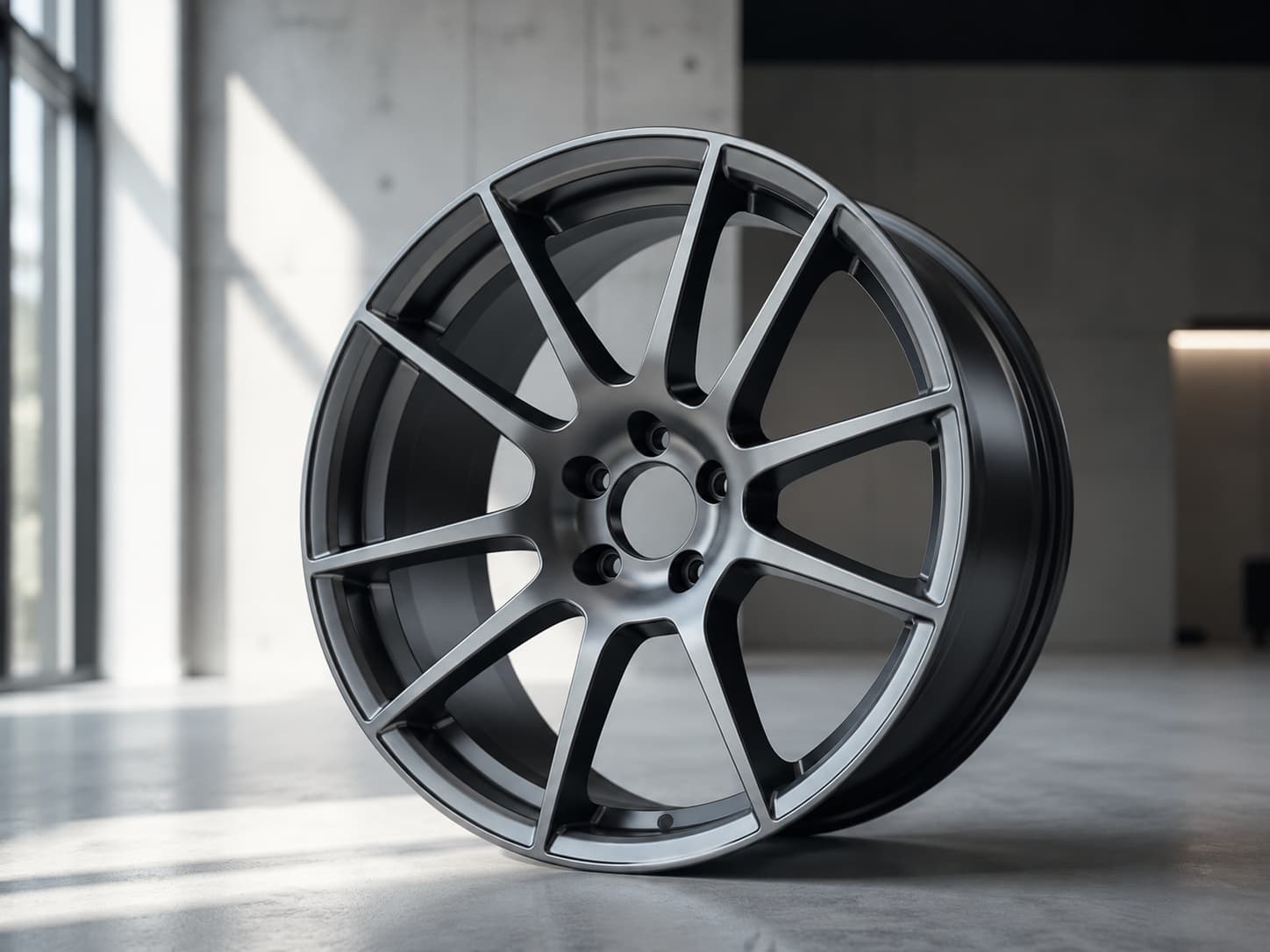
To build a forged wheel brand you need five things in this order: a defined position in the market, a manufacturing partner who will forge under your name at a low MOQ, a first collection of one to three designs in the fitments your market actually drives, approved samples with the test documentation your market requires, and a storefront that sells on fitment data instead of photography. Everything else — the logo, the Instagram grid, the launch video — is packaging around those five decisions. Get the sourcing and the fitment strategy right and a small brand can compete on product; get them wrong and no amount of branding will fix a wheel that doesn’t clear the caliper.
The Short Answer (TL;DR)
Start narrow, not broad. Pick one platform or one aesthetic you understand, choose monoblock for your first release unless your customers specifically want multi-piece, and launch a single design across the two or three fitments that dominate that platform. With a 4-piece MOQ per design and mixed sizes allowed inside that order, you can put a real product on the shelf without committing to a container of stock. Budget your calendar backwards from arrival at your port: 10–15 calendar days for samples, 25–30 for monoblock production after drawing approval, plus ocean freight. Build the storefront around specifications — size, width, PCD, ET, centre bore, load rating — because that is what both your buyers and AI search engines use to decide whether your wheel fits.
Step 1 — Decide What Kind of Wheel Brand You Actually Are
Most new wheel brands fail at positioning, not at manufacturing. “Premium forged wheels for enthusiasts” is not a position; it is what every catalogue says. A workable position tells a specific buyer why your wheel exists and, just as importantly, tells you which fitments to stock. Three models work for a brand starting from zero:
| Brand model | Who buys | SKU strategy | Typical construction | Working capital pressure |
|---|---|---|---|---|
| Platform specialist | Owners of one make or family (e.g. one German premium platform) | Few designs, deep fitment coverage on one PCD | Monoblock | Low — predictable repeat sizes |
| Design-led boutique | Show builds, tuning shops, custom-order buyers | Made-to-order, no stock, long spec sheets | 2-piece / 3-piece | Lowest — customer pays before production |
| Distributor brand | Resellers and installers buying from your shelf | Fewer designs, held stock in fast-moving sizes | Monoblock | Highest — you finance the inventory |
You can move between these later. What you cannot do is run all three at launch, because each one implies a different cash-flow model and a different answer to the question “how many wheels do I need on the water at any moment?”
Step 2 — Lock Your Construction Before You Draw Anything
Construction decides your price shelf, your lead time and how far your face design can stretch across widths. Choose it before you commission artwork, because a face drawn for a monoblock does not automatically transfer to a 3-piece barrel geometry.
| Construction | Best for | Width / offset flexibility | MOQ | Production lead time* |
|---|---|---|---|---|
| Monoblock | First collections, stocked programmes, OEM-plus fitment | Fixed per drawing — each width is its own part | 4 pcs per design, mixed sizes allowed | 25–30 calendar days |
| 2-Piece | Deeper concavity, wider stagger, repairable barrels | High — one face across multiple barrel widths | 4 pcs per design, mixed sizes allowed | 35–40 calendar days |
| 3-Piece | Show builds, extreme lips and dish, bespoke orders | Highest — inner and outer barrels sized separately | 4 pcs per design, mixed sizes allowed | 40–45 calendar days |
*Calendar days from drawing approval, before ocean freight. Samples run 10–15 calendar days on the same basis.
For a first release, monoblock is usually the right call: one part number per size, simpler quality control, the shortest lead time and the cleanest story on a product page. Multi-piece earns its place when your customer wants a lip, an unusual stagger, or a face carried across widths you cannot justify tooling individually. If you’re weighing the two, our breakdowns of forged monoblock wheels and forged 2-piece wheels go through the trade-offs in detail.
Step 3 — Source the Factory, Not the Middleman
The single biggest structural decision in a new wheel brand is whether you buy from the forge or from someone who buys from the forge. A trading company adds a margin, adds a communication layer between you and the engineer who will actually machine your drawing, and — critically — cannot commit to a revision timeline it does not control.
What to verify before you send a drawing
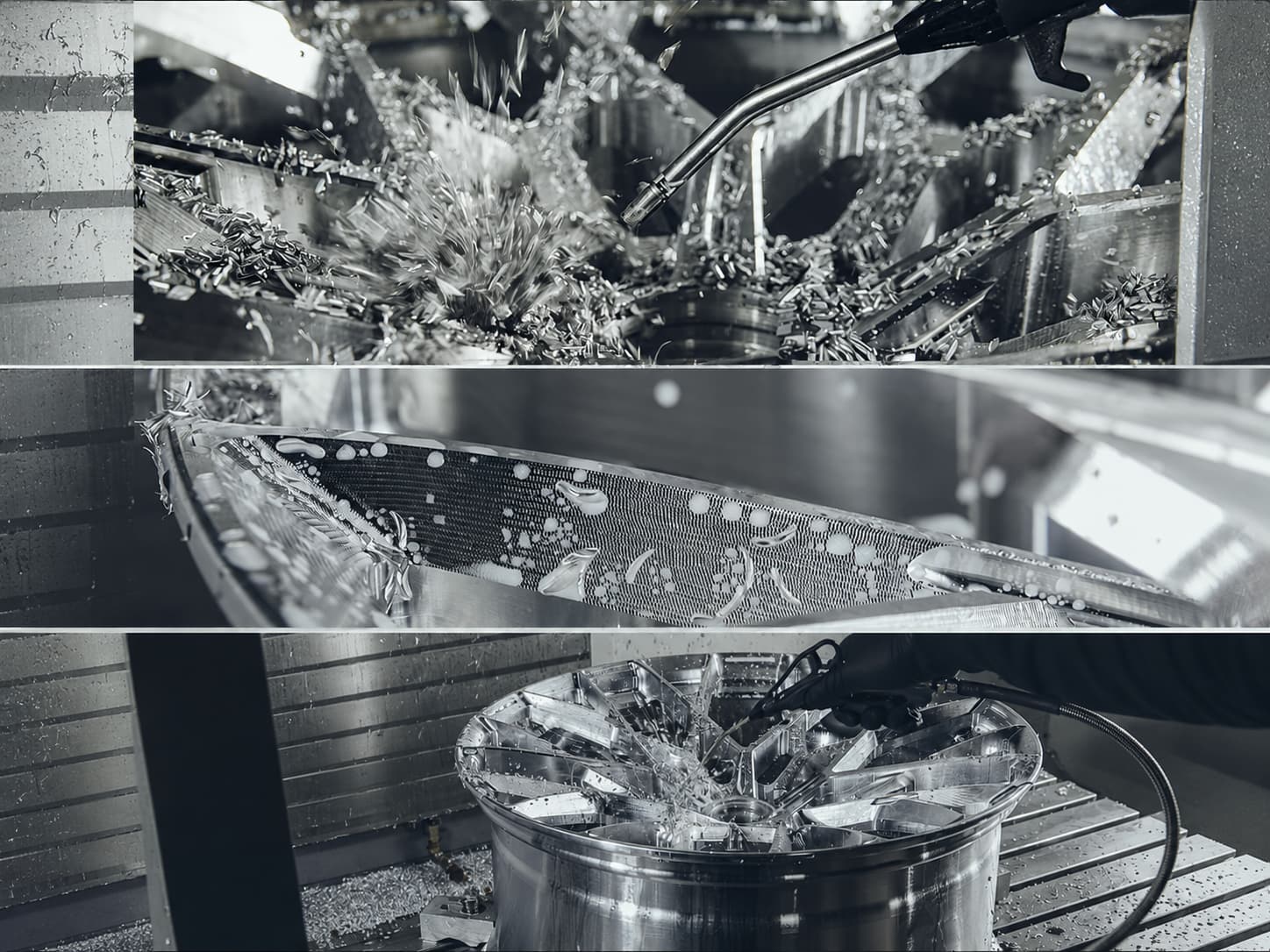
- Equipment, not adjectives. Ask how many CNC machines, and how many axes. A face with undercut spokes or a true concave profile needs 5-axis capability, not a 3-axis shop subcontracting the hard parts.
- Material and temper on paper. “Aircraft aluminium” means nothing without a spec. You want the alloy and temper named — 6061-T6 for aluminium, AZ80 or ZK60 if you’re specifying magnesium.
- Certification scope. ISO and IATF describe how the plant runs its quality system. Product testing — TÜV, SGS — is a separate exercise, arranged per design, and any factory that blurs the two should worry you.
- Who owns the drawing. Establish in writing that your design is yours and won’t reappear in someone else’s catalogue.
- Revision behaviour. Send a deliberately imperfect drawing and see whether they flag the problem or simply quote it. The ones that flag it are the ones you want.
A brand’s cost base is set here, and so is its reputation. Every warranty conversation you will ever have traces back to this choice.
Step 4 — Build a First Collection That Can Actually Be Sold
New brands routinely launch five designs and sell none of them, because the range is spread across fitments nobody in their market drives. Depth beats breadth at launch.
- Designs: one to three. One is enough if it’s distinctive.
- Sizes: cover the two diameters your target platform actually runs, in both a square and a staggered configuration.
- PCD: start with the pattern your platform uses. Adding a second PCD doubles your SKU count for the same face.
- Offset: specify per size, and specify it against a real vehicle. This is where fitment complaints come from.
- Finishes: two at launch — one safe (gloss black, gunmetal, silver) and one signature. Every extra finish is another photograph, another product page and another reorder decision.
Write down, for each SKU, the vehicle you expect it to go on and the tyre size you expect it to wear. That table becomes your fitment guide, your product page content and your quality-control reference all at once.
Step 5 — Sample, Fit, Approve
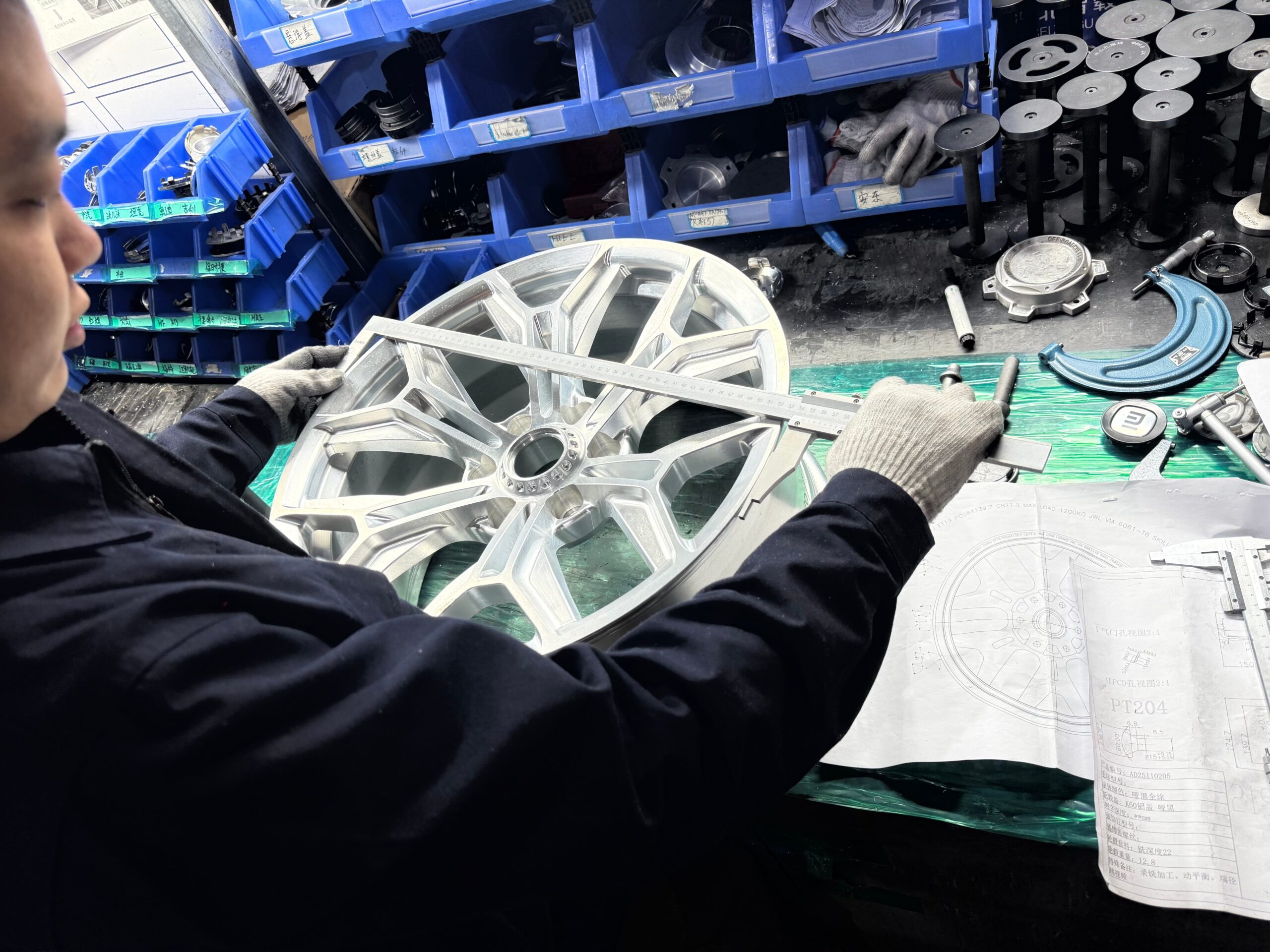
Never launch from renders alone. Order the sample, mount it on the actual car, and check the things photographs cannot show you: caliper clearance at full lock, hub-centric fit, TPMS sensor clearance, valve stem angle, centre cap seating and how the finish reads in daylight rather than in a studio.
Then decide what documentation your market requires. Requirements differ across the EU, North America, Australia and South Africa, and they differ again between road registration and track or show use. Confirm the current rule with your local authority or approval body before you finalise a specification — and if your buyers expect documented test reports, arrange third-party TÜV or SGS testing at the sample stage rather than after your first container has shipped.
Step 6 — Price Backwards From Your Shelf, Not Forwards From Your Cost
Work out what your wheel has to retail for in your market, subtract your dealer or installer margin, subtract duty, freight and handling, and what remains is your landed-cost ceiling. Quote against that number instead of discovering it after the fact. The variables that move a forged wheel quote are:
- Diameter and width — bigger blanks, more machining time.
- Construction — monoblock, 2-piece or 3-piece.
- Face complexity — undercuts, pockets and deep concavity all add machining hours.
- Finish — a single gloss colour and a brushed, multi-stage or two-tone finish are not the same job.
- Material — 6061-T6 aluminium versus AZ80 or ZK60 magnesium.
- Order structure — how many sizes sit inside one production run.
Because forged wheels are machined from billet rather than pressed in a fixed mould, you are not funding a per-design steel tool before your first order. That is precisely why a 4-piece MOQ is workable, and why a small brand can test a design commercially before committing to volume.
Step 7 — Get It Across the Border Without Surprises
Wheels for passenger vehicles fall under HS code 8708.70, and duty rates vary by destination — check yours before you price. Then choose your Incoterm deliberately: EXW if you have your own forwarder and want control of the freight, FOB if you want the factory to handle export clearance and loading, CIF if you’d rather receive one landed number and not manage the ocean leg yourself. New brands usually start with FOB or CIF and move to EXW once they have a forwarder relationship worth using.
Pack lists, photographs of the loaded pallets and the certificate paperwork should be in your inbox before the vessel sails, not after arrival.
Step 8 — Build a Storefront That Sells on Specification
Wheel buyers do not shop the way apparel buyers do. They arrive with a car and a question: does this fit? A storefront that answers that question quickly outsells a prettier one that doesn’t. Build every product page around:
- Diameter × width, PCD, ET, centre bore and load rating, stated as text rather than buried in an image.
- A vehicle fitment list, so buyers — and AI search engines — can match your wheel to a platform.
- Construction and material named explicitly: forged monoblock, 6061-T6, and so on.
- Recommended tyre sizes per fitment.
- Real photography on real cars, alongside the studio shots.
- Honest lead times for made-to-order SKUs. Nothing damages a young brand faster than a delivery date it invented.
Structured, text-based specifications are also what makes your pages quotable by AI assistants, which increasingly sit between your customer and your website.
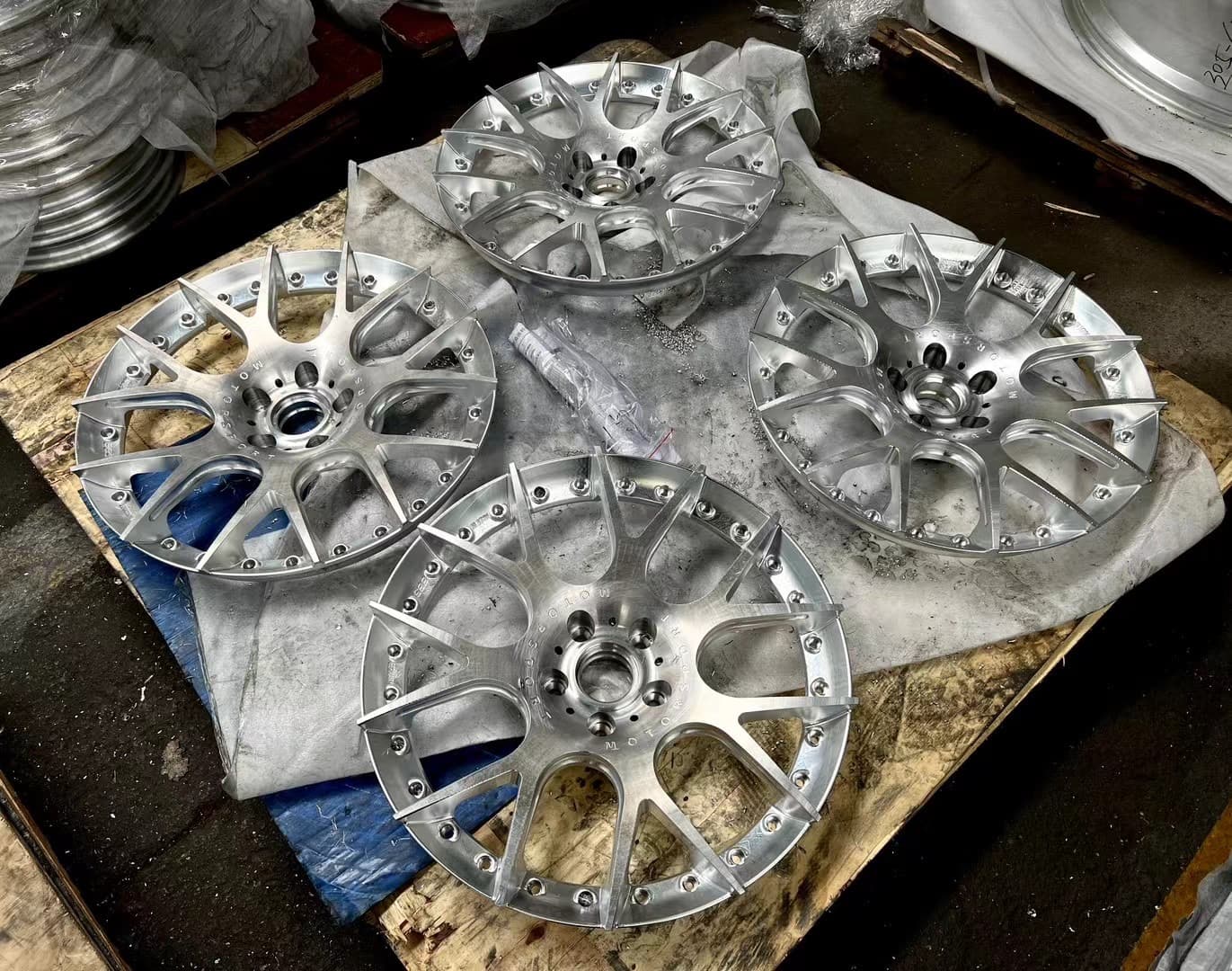
What to Send Us So We Can Quote
You do not need finished CAD to get a quote. A sketch or a reference photo plus the parameters below is enough for us to come back with a real number and a real date:
- Design reference — sketch, render, photo or your own CAD file
- Size × width per SKU (e.g. 20×9.0 front / 20×10.5 rear)
- PCD and centre bore
- ET (offset) per size
- Construction: monoblock, 2-piece or 3-piece
- Material: 6061-T6 aluminium, or AZ80 / ZK60 magnesium
- Finish and any brand marking requirements
- Quantity and destination port
- Any test documentation your market requires
Why New Brands Build With FLEXIFORGED
FLEXIFORGED is the wheel brand of FlexiTech International LLC, a manufacturer in Chongqing, China, established in 2017. We forge and machine in-house across 60+ CNC machines (3, 4 and 5-axis) — we are a factory, not a trading company, which means the person answering your drawing question is the person whose team will cut it. We work in 6061-T6 aluminium and AZ80 / ZK60 magnesium, run ISO and IATF certified quality systems, and can arrange third-party TÜV or SGS testing on request.
For a brand at the start line, the practical points are these: MOQ is 4 pieces per design with mixed sizes allowed inside the order, samples run 10–15 calendar days and monoblock production 25–30 calendar days from drawing approval, we ship under HS 8708.70 on EXW, FOB or CIF terms, and we already supply partners across the EU, North America, Australia and South Africa. You can read more about our factory or browse what we build in custom forged wheels.
Frequently Asked Questions
How much does it cost to start a forged wheel brand?
There is no fixed entry ticket, because forged wheels are machined from solid billet rather than pressed in a fixed mould, so you are not funding a per-design steel tool before you can order. Your real budget is driven by three things: how many designs you launch, how many sizes and PCDs you cover per design, and whether you order monoblock or multi-piece. A single monoblock design in two sizes at our 4-piece MOQ is a far smaller commitment than five designs across eight fitments. Send us your design list and we will quote the exact figure.
What’s your MOQ if I’m just launching a brand?
4 pieces per design, and you can mix sizes inside that order — a staggered set of two fronts and two rears counts as one 4-piece order. That lets you launch a design, photograph it, take pre-orders and reorder, without financing a container of stock up front.
Can you produce wheels under my own brand name?
Yes. We manufacture on a factory-direct basis for private-label and OEM programmes, so the wheels carry your brand marking rather than ours. Brand engraving position, centre cap design and packaging are all discussed at the drawing stage — tell us what you need and we will confirm what is feasible on your specific design.
How long from approved drawings to finished wheels?
From drawing approval, samples run 10–15 calendar days. Production is 25–30 calendar days for monoblock, 35–40 for 2-piece and 40–45 for 3-piece. Ocean freight to your destination port is added on top, so plan your launch date backwards from arrival rather than from the end of production.
Do I need TÜV or SGS testing to sell in my market?
It depends on the market and on how the wheels will be used. Requirements differ between the EU, North America, Australia and South Africa, and Germany in particular expects a parts certificate for road registration, so confirm the current rule with your local authority or approval body before you commit to a specification. We hold ISO and IATF certification, and third-party TÜV or SGS testing can be arranged on request when your market or your customers require documented test reports.
Can I start with one design and add more later?
That is how most of the brands we work with start. Launch one strong design, prove which fitments actually sell in your market, then extend the same face into more sizes or add a second design. Because each design is machined from billet, adding designs later costs you nothing in stranded tooling on the first one.
Start Your First Collection
If you have a design in mind — or just a reference photo and a platform you want to build for — send it over and we will come back with a quote, a lead time and any fitment issues we can see before you commit. Email jackie.wei@flexiforged.com.
To quote quickly, include: Size × Width / PCD / ET / Quantity / Destination port / Email.