Wheels / Forged Concave
Forged Concave Wheels: Depth Your Fitment Earns
Forged concave wheels carry a face profile where the spokes curve inward from the rim edge toward the hub — and how deep that curve can go is not a catalog choice. It is set by your wheel width, your offset and your brake calipers, which is why we engineer the profile per car and put it on a drawing you approve before anything is cut. A face geometry, not a construction: available across monoblock, 2-piece and 3-piece, 15–26", MOQ 4 pcs.
- Designed & inspected in-house
- 60+ CNC at our group's plant
- ISO & IATF 16949 certified plant
- MOQ from 4 pcs
- Worldwide export
What makes a wheel "concave"?
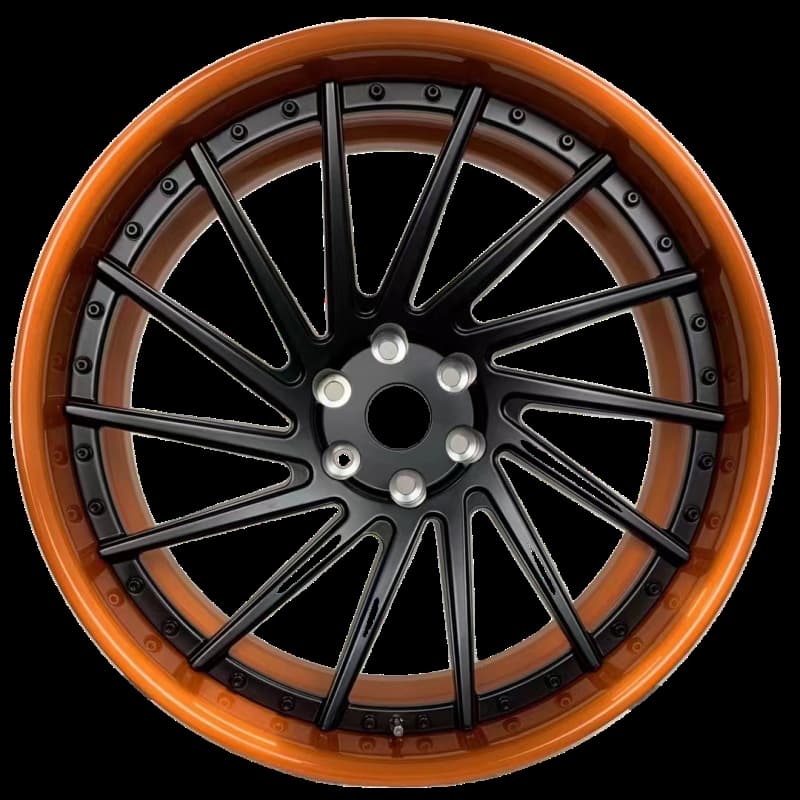
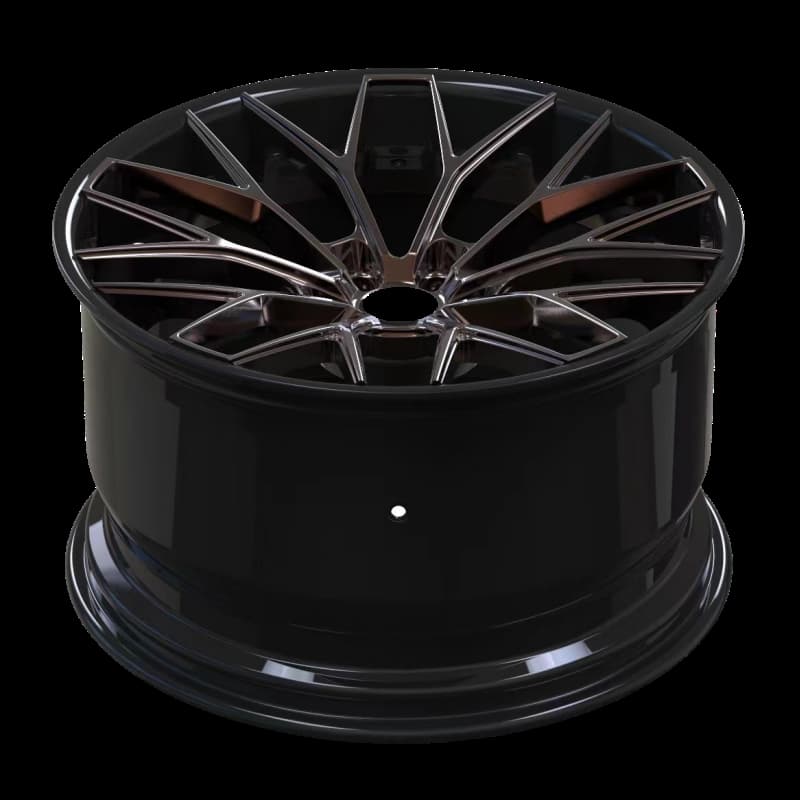
Stand at the side of the car and look at the wheel face. On a flat-face wheel, the spokes sit level with the rim edge. On a concave wheel, they fall away — curving inward toward the hub, behind the rim face plane. The further they fall, the deeper the concave. That's the whole definition; everything else is engineering:
One clarification worth a sentence, because buyers mix the terms: concave is not deep dish. Concave describes the spoke face curving toward the hub; deep dish describes a deep outer lip between spokes and rim edge. Different dimensions, freely combinable — a 3-piece wheel can run a concave face and a deep lip at once.
What decides how deep your concave can go?
Here is the honest engineering most concave marketing skips. Three variables set the limit, and none of them is your taste:
| Variable | How it works | Rule of thumb |
|---|---|---|
| Wheel width | The profile needs physical room to curve — a wider barrel gives the face more distance to fall away in | More width → deeper concave possible |
| Offset (ET) | ET positions the hub mounting face relative to the rim centreline — it moves the "floor" the spokes curve down to | ET shifts what the width allows; it is engineered with the profile, not after it |
| Brake clearance | The spokes must clear the caliper at full depth, at every point of rotation | Big brake kits are the hard limit — measured, not guessed |
This is why we don't sell "concave levels". A fixed Level-3 profile from a catalog either wastes depth your car could carry, or promises depth your calipers won't allow. We design the maximum safe profile for your width, ET and brakes — you see it on the drawing, with the load rating, before anything is cut. Not sure of your numbers? The fitment guide shows how to measure them in about 30 minutes.
Which construction carries your concave?
Concave is a face geometry — the construction underneath is a separate choice, and all three of ours carry it:
Monoblock concave
The face and the barrel are one continuous piece of forged 6061-T6 — the cleanest concave look at the lowest weight. The choice when the profile is the whole point. Monoblock →
2-piece concave
A concave centre paired with a spun rim section — one face design built to multiple widths, and width is what feeds depth. 2-piece →
3-piece concave
Concave face plus a configurable lip — the combination platform: concave and dish on one wheel, with part-by-part repairability. 3-piece →
Does deep concave cost you strength?
The profile is engineered to the load rating — never the other way round. Every wheel is designed per vehicle with its rating stated on the drawing and engraved into the barrel; it is machined from a forged 6061-T6 blank, inspected twice, and 100% runout tested under 0.01". A concave design that couldn't carry its rated load would die at the drawing stage, where changes cost an email instead of a wheel.
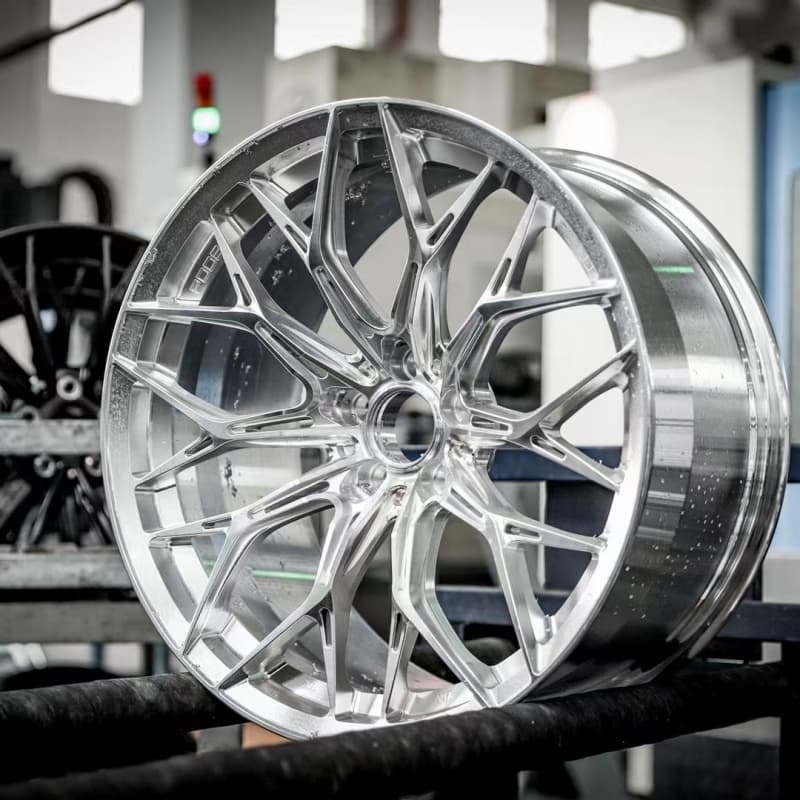
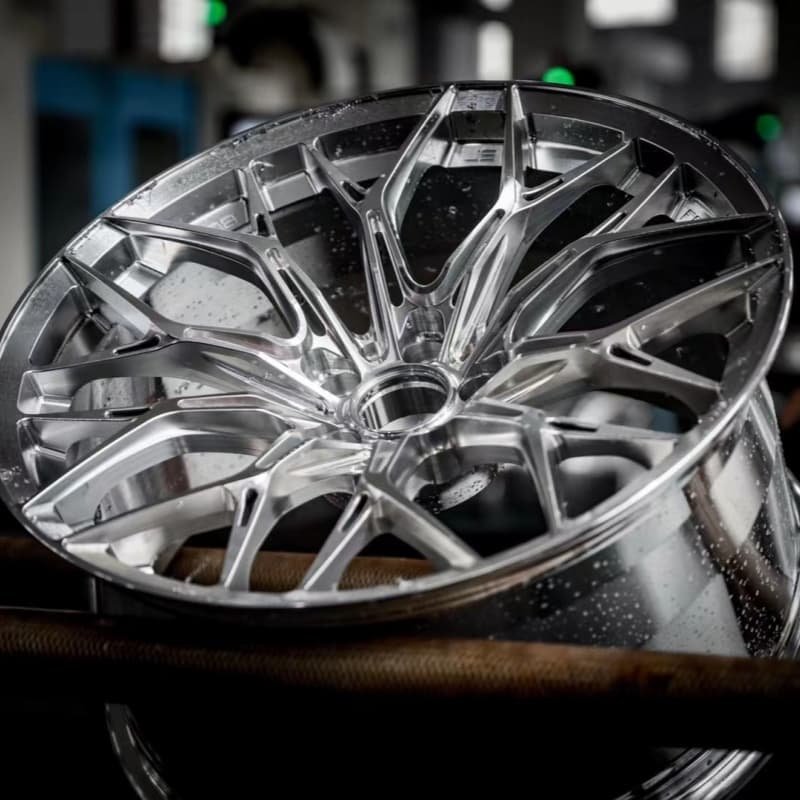
On finish: concave faces reward finishes that follow the curve — brushed and two-tone read especially well across a falling face, and both add about 5 working days. The full layer-type logic, including why polished ships bare, is on finishes.
Forged concave wheels FAQ
What are concave wheels?
Wheels with a face profile where the spokes curve inward from the rim edge toward the hub, sitting behind the rim face plane. Concave is a face geometry, not a construction — it builds on monoblock, 2-piece and 3-piece alike. The deeper the spokes fall behind the rim plane, the stronger the effect.
How deep can the concave go on my car?
Three things set the limit: width (room for the curve), offset (where the hub face sits), and brake caliper clearance (the spokes must clear at full depth). That's why we don't sell fixed concave levels — the profile is engineered per vehicle and shown on the drawing you approve before anything is cut, load rating included.
What's the difference between concave and deep dish?
Concave = the spoke face curving toward the hub. Deep dish = a deep outer lip between spokes and rim edge. Different dimensions of the same wheel, freely combinable — a 3-piece can carry both at once.
Which construction should I choose?
Monoblock for the cleanest profile at the lowest weight; 2-piece for one face design across multiple widths; 3-piece for concave plus a configurable lip and part-by-part repairs. The face is available on all three — the construction choice is its own decision, covered on those pages.
Does deep concave weaken the wheel?
The profile is engineered to the load rating, not the other way round — the rating is on the drawing and engraved into the barrel, the blank is forged 6061-T6, and every wheel is inspected twice with 100% runout testing under 0.01". A profile that couldn't carry its load wouldn't survive the drawing stage.
What sizes are available and how long does it take?
15–26" diameters, 5–16" widths, ET engineered per vehicle, CB machined to your hub. Samples 10–15 working days; production 20–30 after drawing approval; +5 for brushed, polished or two-tone; +15 for PVD chrome. MOQ 4 pcs, mixed sizes accepted, worldwide.
Send your numbers. See your maximum concave on paper.
Size front & rear, PCD, ET, CB, brake setup, finish — pricing and a drawing come back showing the deepest profile your fitment safely carries. Nothing is cut until you approve it. From 4 pcs, worldwide.
FLEXIFORGED — Shapingba District, Chongqing, China · Founded 2017 · jackie.wei@flexiforged.com · +86 178 3048 5180