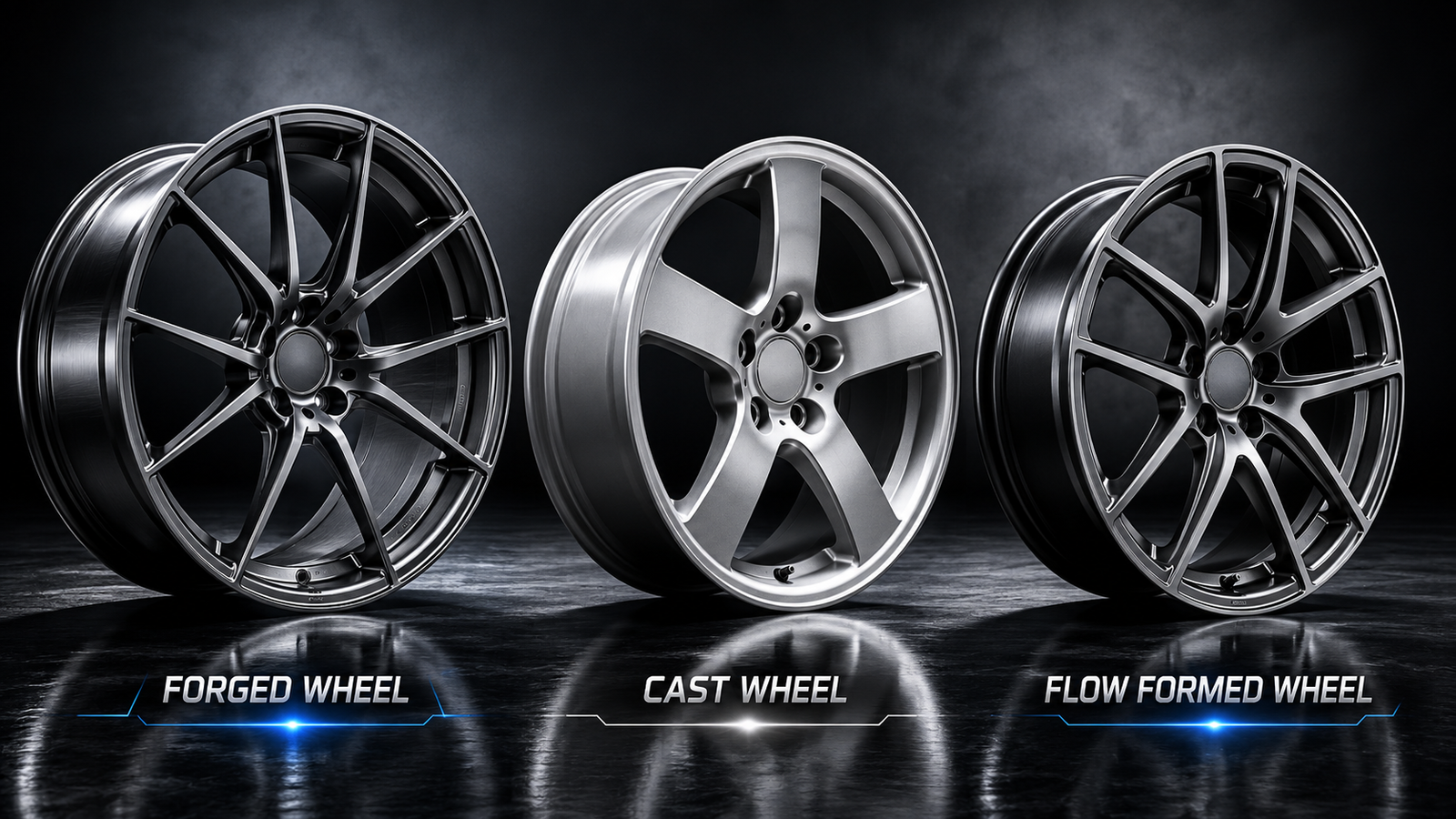
For B2B buyers, the difference is structural: cast wheels are poured from molten aluminum, flow-formed wheels are cast and then roll-stretched in the barrel, and forged wheels are pressed from a solid billet under thousands of tons of force. That single distinction drives everything you care about as a buyer — strength-to-weight, weight, customization flexibility, minimum order quantity, tooling cost, and landed price. If your program needs custom fitments, low-to-mid volumes, or a premium positioning, forged is the method that fits; if you are filling a high-volume economy SKU, cast usually wins on unit cost.
The Short Answer (TL;DR)
Choose cast for the lowest unit cost at high volume when weight and customization are not priorities. Choose flow-formed for a mid-tier balance — lighter and stronger in the barrel than cast, but still a cast center and still tied to fixed molds. Choose forged when you need the best strength-to-weight, the lightest wheel for a given load rating, and full freedom over sizes, offsets and finishes with a low minimum order. At FLEXIFORGED we manufacture forged monoblock and multi-piece wheels from 6061-T6 aluminum (and AZ80/ZK60 magnesium) starting at an MOQ of 4 pieces, with mixed sizes allowed in one order.
Forged vs Cast vs Flow-Formed: Process Comparison
The table below summarizes how the three methods compare on the factors that matter most in a sourcing decision. “Relative” values are typical industry positions, not absolute numbers — actual figures depend on alloy, design and load target.
| Factor | Cast | Flow-Formed (flow-forged / rotary) | Forged (monoblock / multi-piece) |
|---|---|---|---|
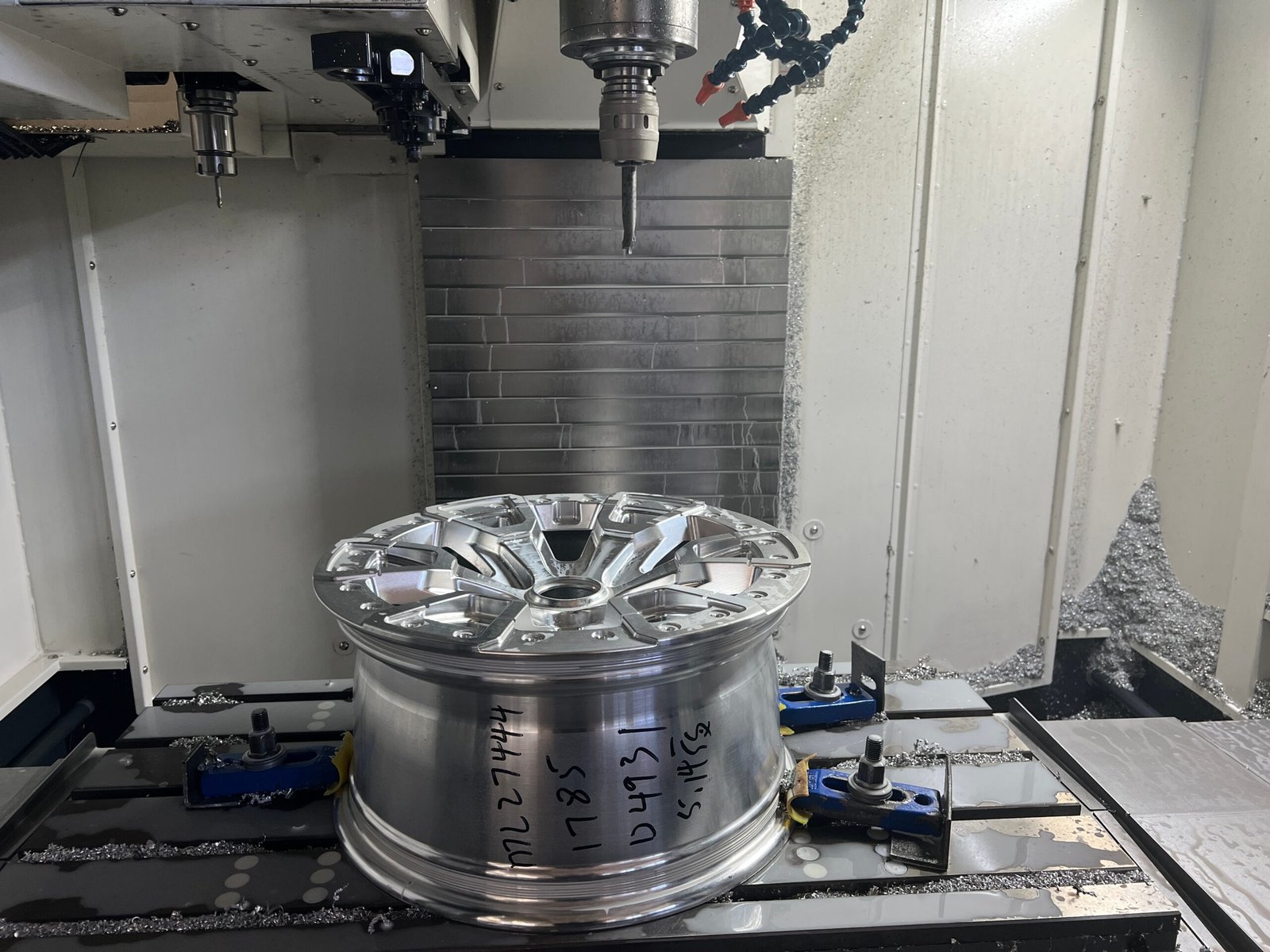
| Core process | Molten aluminum poured into a mold (gravity or low-pressure) | Low-pressure cast center, barrel spun and roll-stretched under heat | Solid billet compressed under thousands of tons, then CNC machined |
| Grain structure / density | Random grain, higher porosity | Aligned grain in the barrel only; cast center | Dense, continuously aligned grain throughout |
| Strength-to-weight | Lowest | Medium | Highest |
| Weight (same size & load) | Heaviest | Lighter than cast | Lightest |
| Customization (size / ET / PCD / finish) | Limited — tied to existing molds | Limited — tied to existing molds | Fully bespoke — machined to spec |
| Tooling cost & MOQ logic | High mold cost, amortized over very high volume | High mold cost, high volume | No per-design mold; viable at low MOQ |
| Typical MOQ posture | Hundreds+ per design | Hundreds+ per design | From 4 pcs (FLEXIFORGED), mixed sizes OK |
| Lead time posture | Long once tooled; fast in re-runs | Long once tooled | Sample 10–15 working days; production 20–30 working days |
| Relative unit cost | Lowest | Mid | Highest per piece, but no mold investment |
| Best fit | High-volume economy / OEM fill | Performance value tier | Custom, premium, motorsport, low-to-mid volume |
How Each Method Affects the Decision
Strength and weight (unsprung mass)
Forging compresses the aluminum so the grain flows continuously around the wheel, eliminating most porosity and producing the highest strength-to-weight ratio of the three methods. For buyers selling into performance, luxury or motorsport segments, that means a lighter wheel at the same load rating — and lower unsprung mass, which is a tangible selling point downstream. Flow-forming improves only the barrel; the cast center is unchanged. Cast wheels carry the most material to hit a given strength target, so they are the heaviest.
Customization and fitment freedom
Cast and flow-formed wheels are bound to the mold that was cut for that design, so width, offset (ET) and bolt pattern (PCD) options are whatever the existing tooling allows. Forged wheels are machined from a blank, so width, ET, PCD, center bore, concavity, lip depth and finish are all defined per order. For programs that need staggered setups, unusual offsets, or fitments that no off-the-shelf mold covers, forged is often the only practical route.
Volume, tooling and MOQ economics
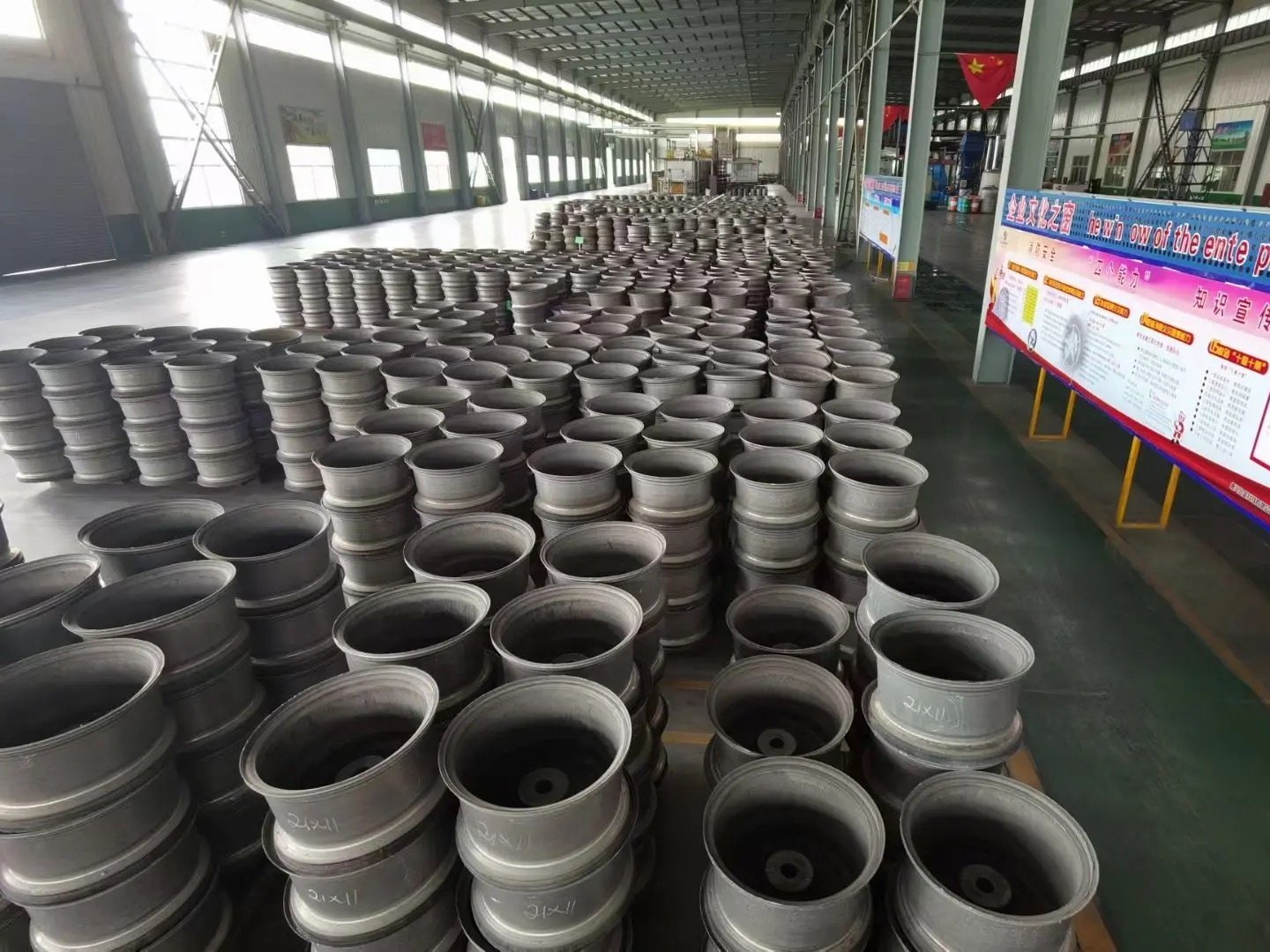
Cast and flow-formed economics depend on amortizing an expensive mold across a large run, which is why their realistic minimums sit in the hundreds per design. Forging needs no per-design mold, so the cost structure supports small batches. We start at an MOQ of 4 pieces and allow mixed sizes within one order — practical for distributors testing a range, tuners building one-off setups, or brands validating a new SKU before scaling.
Lead time and certification
Once a cast or flow-formed mold exists, re-runs are quick, but the initial tooling stage is long. Forged lead times are predictable per order without a tooling step: at FLEXIFORGED, samples run 10–15 working days and production 20–30 working days. On compliance, we manufacture under ISO and IATF systems, and third-party TÜV or SGS testing is available on request — useful when your destination market or your own customers require independent verification.
What to Send Us for an Accurate Quote
To price a forged program quickly and avoid back-and-forth, include the following in your inquiry:
- Size × Width — e.g. 19×9.5 (and the staggered rear if different)
- PCD (bolt pattern) — e.g. 5×112
- ET (offset) — front and rear if staggered
- Center bore (CB) — hub-centric diameter
- Construction — monoblock or 2-piece
- Finish / style — gunmetal, brushed, gloss black, custom, etc.
- Quantity — total pieces (mixed sizes allowed)
- Destination port — for EXW / FOB / CIF quoting
- Certification needs — note if you require TÜV/SGS reports
- Email — to receive the quote and drawings
Why FLEXIFORGED for Forged Wheels
FLEXIFORGED is the wheel brand of FlexiTech International LLC, a manufacturer — not a trading company — based in Chongqing, China and established in 2017. We run our own forging and precision finishing in-house, with 60+ CNC machines (3-, 4- and 5-axis), so the billet-to-finished-wheel chain stays under one roof. We forge from 6061-T6 aluminum and, for weight-critical applications, AZ80 and ZK60 magnesium. Orders start at 4 pieces with mixed sizes allowed; samples ship in 10–15 working days and production in 20–30. We export under HS 8708.70 on EXW, FOB or CIF terms to the EU, North America, Australia and South Africa, working with ISO and IATF systems and optional third-party TÜV/SGS verification.
If you are deciding between constructions, our custom forged wheels hub explains the full range, while the forged monoblock wheels and forged 2-piece wheels pages cover the two construction types in detail.
Frequently Asked Questions
What’s the real difference between forged and flow-formed wheels?
A forged wheel is pressed from a solid billet, so its grain is dense and aligned throughout the entire wheel. A flow-formed wheel starts as a cast center, then the barrel is spun and roll-stretched to strengthen only that barrel — the center stays cast. Forged gives you the best strength-to-weight everywhere; flow-formed is a value compromise.
What’s your MOQ?
4 pieces. You can also mix sizes within a single order, which is helpful for staggered setups or testing a small range before scaling.
How long is your lead time?
Samples run 10–15 working days and production runs 20–30 working days. Because forging needs no per-design mold, we don’t add a separate tooling stage to that timeline.
Are forged wheels worth the higher unit cost for a B2B program?
It depends on positioning. For high-volume economy SKUs, cast is cheaper per piece. For custom fitments, premium or motorsport segments, and low-to-mid volumes, forged usually wins on total value: no mold investment, full customization, lighter weight, and a stronger selling story to your own customers.
Can you provide TÜV or SGS certificates?
Yes. We manufacture under ISO and IATF systems, and third-party TÜV or SGS testing is available on request for markets or customers that need independent verification.
Do you sell forged wheels or also magnesium?
Both. We forge 6061-T6 aluminum for most applications and AZ80/ZK60 magnesium when weight is critical. Tell us your load target and use case and we’ll recommend the material.
Get a Quote
Send your specs and we’ll come back with pricing and drawings. Include: Size×Width · PCD · ET · Quantity · Destination port · Email. Reach us at jackie@flexiforged.com or visit flexiforgewheel.com.
Jackie Wei · Co-founder, FLEXIFORGED · jackie@flexiforged.com
10+ years in the automotive parts industry, focused on forged wheel manufacturing and B2B sourcing.